
Hey there, fellow textile lover! If you’ve ever run your fingers over a beautifully intricate, breezy white kurti and felt an instant connection to centuries of Indian heritage, you already know the magic of Chikan work. Originating from the royal courts of Awadh (modern-day Lucknow), this stunning form of shadow work embroidery is the epitome of effortless elegance.
But let’s be real for a second. Head over to any online shopping app or scroll through your Instagram feed, and you’ll see thousands of sellers claiming to offer “authentic Lucknowi Chikankari” at prices that seem too good to be true. A gorgeous, heavily embroidered pastel georgette kurti for just ₹599? It sounds like a dream.
Unfortunately, more often than not, it’s a counterfeit nightmare.
With the rise of high-speed textile factories, the market is absolutely flooded with cheap, computer-generated machine copies that mimic the look of traditional hand embroidery but possess none of its soul, durability, or value. If you want to invest your hard-earned money into the real deal, you need to know what to look for.
Grab a cup of chai, and let’s unpack exactly how to spot authentic Lucknowi Chikankari like a seasoned textile expert, ensuring you never get ripped off again.
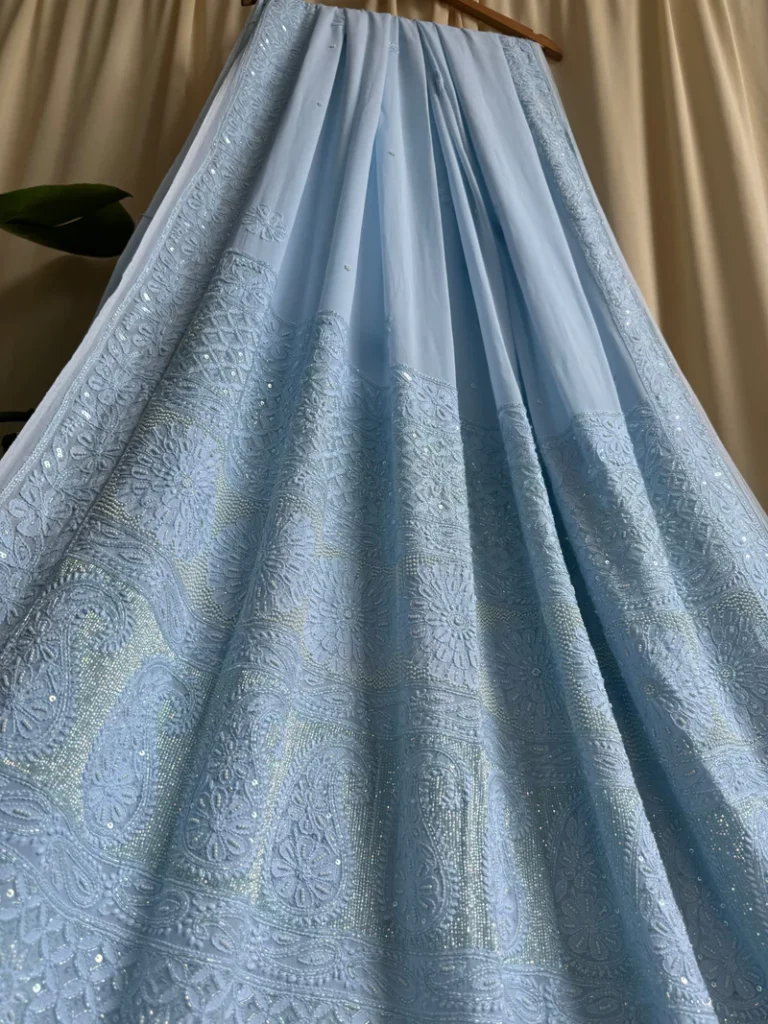
Why Is Traditional Hand-Embroidered Chikan Work So Expensive?
Before we dive into the testing methods, it helps to understand why genuine hand-embroidered pieces command a premium price.
True Chikankari isn’t just a style of sewing; it is an incredibly meticulous, multi-step artistic process practiced by skilled Lucknow artisans, many of whom have kept this heritage craft alive across generations.
The journey of a single authentic Lucknowi Chikankari garment looks something like this:
[Design & Wooden Block Printing] ➔ [Months of Hand Stitching by Artisans] ➔ [Washing & Bleaching] ➔ [Finishing]
- The Block Printing: The design is first stamped onto raw, unwashed fabric using hand-carved wooden blocks dipped in washable indigo ink.
- The Embroidery: Artisans spend anywhere from three weeks to six months hand-stitching over these blue ink lines using various specialized needlework styles.
- The Washing: Once finished, the garment is washed repeatedly by professional washermen (Dhobis) in the local river water to completely remove the blue printing ink, revealing the pristine, finished embroidery underneath.
When you buy a piece of mass-produced machine embroidery, a computer handles the design, and a mechanized needle punches out thousands of identical patterns in under ten minutes. When you buy authentic Lucknowi Chikankari, you are paying for weeks of human labor, unmatched precision, and a piece of living history.
The Flip Test: How to Identify Hand-Embroidered vs. Machine Embroidery
If you only remember one tip from this guide, make it this one. It is the absolute quickest, most foolproof way to identify an authentic Lucknowi Chikankari outfit in under five seconds.
Step 1: Turn the garment completely inside out.
Take a close look at the reverse side of the embroidery lines.
Step 2: Analyze the thread work.
- The Handloom Reality: On a genuine, hand-crafted piece, the back will look slightly messy. You will see tiny knots, loose thread tails where an artisan finished one thread and tied off another, and small human imperfections. No two motifs will look exactly identical on the reverse side because a human hand guided the needle.
- The Machine Fake: On a machine-made replica, the reverse side will look impeccably neat, almost like a uniform grid or a flat patch. Crucially, you will notice a thin, transparent, paper-like lining material (known as fusing or backing paper) stuck to the back, or a distinct web of locking threads that looks mechanically perfect.
If the inside of your kurti looks like a flawless, laser-precise grid without a single loose knot or thread tail, it is absolutely not authentic Lucknowi Chikankari.
Decoding Chikan Work Styles: Look for Traditional Indian Stitches
Another great way to verify authenticity is by looking closely at the types of stitches used on the fabric surface. Traditional Lucknow embroidery consists of over 32 distinct stitches, which are generally categorized into flat stitches, raised embossed stitches, and open-network patterns.
When searching for an authentic Lucknowi Chikankari piece, train your eyes to look for these three iconic, highly intricate stitch variations that commercial machines simply cannot replicate accurately:
1. The Shadow Work Magic (Bakhiya)
Bakhiya is the herringbone stitch, and it is the absolute signature of high-quality Chikan work. The artisan infuses thread tightly across the wrong side of the fabric so that a soft, beautiful shadow or opaque silhouette forms on the right side. It gives the garment an ethereal, multi-dimensional look. Machines try to copy this, but their stitches look blocky, thick, and lack the delicate grace of human needlework.
2. The Knotted Embossed Stitch (Phanda and Murri)
Want texture? Look for Phanda (which looks like tiny, raised millet grains) and Murri (which forms pear-shaped grain knots). These knots give the fabric a gorgeous, tactile texture that you can easily feel when you run your hand over the surface. Machine replicas struggle to create these individual, raised human knots; instead, they produce flat, messy loops that easily snag and unwrap over time.
3. The Open-Network Jali Stitch
Traditional Jali work is architectural art on fabric. To create these beautiful, mesh-like windows, an artisan does not cut the fabric. Instead, they use a thick needle to gently tease apart the warp and weft threads of the cloth and bind them securely with fine thread to create organic, translucent holes.
Machines cannot handle this delicate structural manipulation. A machine fake will either use a cheap laser-cut hole method or simply embroider a criss-cross pattern on top of the fabric without creating real open airspaces.
Fabric Check: Selecting the Right Cotton, Silk, and Georgette Fabric Base
The fabric material onto which the embroidery is woven tells a huge story about its origin. Because hand embroidery requires a needle to pierce the fabric thousands of times without tearing it, artisans naturally prefer premium, long-staple textile bases that offer structural integrity.
Historically, Chikan work was strictly done on pure, breathable cotton fabric like fine muslin (malmal). Today, the craft has evolved beautifully to include luxury textiles like pure Chanderi, linen, cotton-silk blends, and flowing georgette fabric.
Here is what you need to keep in mind when checking the fabric base:
- Synthetic Fakes: Machine-manufacturing thrives on cheap synthetic materials like 100% polyester or low-grade faux georgette. These fabrics are stiff, trap body heat, and are uncomfortable to wear in warm climates.
- Artisan Choice: An authentic Lucknowi Chikankari piece will almost always be crafted on premium, pure, and breathable natural fibers or high-grade viscose georgette. Viscose georgette drapes beautifully against the body and absorbs traditional dyes gorgeously, unlike polyester which repels rich dye colors.
Pro Tip: If the product description reads “Poly-Georgette” or “Polyester Blend” and features incredibly heavy embroidery at a very low price point, it is almost certainly a machine-made garment masquerading as premium heritage wear.
The Definite Price Check: Why Real Artistry Comes with a Price Tag
Let’s talk numbers, because budget is a massive indicator of authenticity. We all love a good bargain, but we have to be realistic about the human economics behind this traditional craft.
Imagine an artisan sitting in a village outside Lucknow, dedicating 4 to 5 hours of intensive, eye-straining labor every single day for two weeks straight just to complete a single, semi-heavy kurti. Factor in the cost of premium raw cotton or viscose fabric, the wooden block printing setup, the professional river washing, and a fair living wage for their immense skill.
Mathematically, it is impossible for that finished product to sell retail for ₹400 or ₹600.
| Garment Type | Machine-Made Copy Price Range | Authentic Lucknowi Chikankari Price Range |
| Basic Everyday Kurti | ₹350 – ₹700 | ₹1,200 – ₹2,500 |
| Mid-Range Festive Suit Set | ₹900 – ₹1,800 | ₹3,500 – ₹7,000 |
| Heavy Luxury / Bridal Lehenga | ₹4,000 – ₹8,000 | ₹15,000 – ₹1,00,000+ |
If you spot a website advertising a heavily embellished, floor-length ensemble for a rock-bottom price, adjust your expectations immediately. You are looking at a machine-stitched imitation.
There is absolutely nothing wrong with buying machine-made ethnic wear for casual, everyday home use if you are on a tight budget! However, it shouldn’t be deceptively marketed or priced as premium, hand-crafted authentic Lucknowi Chikankari.
Look for the GI Tag Certification Logo
Did you know that Lucknow Chikankari is legally protected? Yes, you read that right!
In recognition of its deep historical roots and to protect the livelihoods of lakhs of local artisans, Lucknow Chikankari was granted the Geographical Indication (GI) status by the Government of India.
A GI Tag is essentially an official intellectual property stamp confirming that a product possesses specific qualities, is made using traditional methods, and originates strictly from a particular geographic region (in this case, the Lucknow cluster).
When you are shopping from high-end heritage boutiques, government emporiums, or verified sustainable fashion brands online, always check if they display the official GI Tag certification logo or a handloom mark on their labels. It is the ultimate legal guarantee that you are purchasing an authentic Lucknowi Chikankari masterpiece.
How to Care for Your Precious Hand-Embroidered Wardrobe
Once you have successfully hunted down and invested in a stunning piece of genuine, hand-embroidered heritage wear, your job isn’t quite done. Because the delicate threads on an authentic Lucknowi Chikankari garment are entirely woven by hand, they require a little extra love and tenderness during laundry day to ensure they don’t snag, fray, or unravel.
Follow this gentle care routine to keep your heirloom pieces looking brand new for decades:
- Always Hand Wash: Never throw your hand-embroidered kurtis into a harsh, spinning washing machine. The agitator can easily catch on the delicate Jali or Bakhiya threads and snap them. Instead, gently dip the garment in a bucket of cold water mixed with a mild, liquid detergent.
- Avoid Direct Sunlight: When drying your gorgeous pastel or vibrant dyed pieces, always hang them to dry inside out in a shaded, well-ventilated area. Direct, harsh sunlight can quickly bleach natural dyes and weaken the cotton embroidery threads.
- Iron with Caution: Never press a scorching hot iron directly onto the raised embroidery knots (Phanda). It can flatten the gorgeous texture or scorch the threads. Always place a thin, clean white cotton cloth over the embroidery as a protective barrier, or iron the garment completely inside out.
Wrap Up: Wear the Story, Support the Craft
At the end of the day, learning how to spot authentic Lucknowi Chikankari is about more than just smart shopping—it’s about preserving human artistry. Every tiny knot, slight imperfection, and unique shadow stitch on a genuine handloom garment tells the story of a real artisan who poured their time, cultural heritage, and soul into creating something beautiful for your wardrobe.
The next time you go shopping for your festive wardrobe, take a moment to flip that fabric over, run your fingers across the textures, and check the inner seams. Choose slow fashion, celebrate human craftsmanship, and wear your authentic Indian textiles with absolute pride!
Have you ever accidentally bought a machine-made fake thinking it was real? What’s your absolute favorite Chikan stitch style to wear? Let me know in the comments below—I’d love to chat with you!
See Also
Tone-on-Tone Elegance: How to Style Monochromatic Indian Outfits for Corporate Spaces
How are Lucknow’s Chikankari Designs made?