
Welcome back to the blog, textile enthusiasts! If you have ever draped a heavy, brilliantly colored shawl over your shoulders and felt instantly wrapped in the opulence of a royal court, you have likely encountered the breathtaking world of Jamawar weaving. Among India’s vast treasury of textile arts, few fabrics possess the sheer poetic beauty, staggering complexity, and historical weight of a traditional Kashmiri Jamawar.
Originating in the mist-laden valleys of Kashmir, this textile isn’t merely clothing; it is a meticulously woven tapestry of global trade, royal patronage, and unrivaled human patience. In an era dominated by fast fashion and fleeting digital trends, the Jamawar stands tall as an enduring symbol of luxury.
But what exactly makes this weave so legendary? How did a textile born in the alpine climate of northern India find its way into the imperial courts of Persia, the Mughal Empire, and even the high-fashion salons of 19th-century Europe?
Let’s journey back through time to unpack the fascinating history, intricate symbolism, and modern evolution of the traditional Kashmiri Jamawar.
What Exactly is a Jamawar? Unlocking the Royal Etymology
To truly appreciate this fabric, we have to look at its name, which reveals its historical purpose. The word Jamawar is derived from two Persian roots: Jama meaning a gown, robe, or garment, and War meaning yardage or cloth. Literally translated, it means “a yardage grown for making royal robes.”
Historically, Kings, Nawabs, and high-ranking courtiers didn’t just wear Jamawar as simple shawls. Instead, they purchased long, unstitched bolts of this ultra-luxurious material to stitch into bespoke imperial gowns, structured tunics (Sherwanis), and ceremonial sashes.
[ Jama = Royal Robe ] + [ War = Fabric Yardage ] ➔ The Garment of Kings
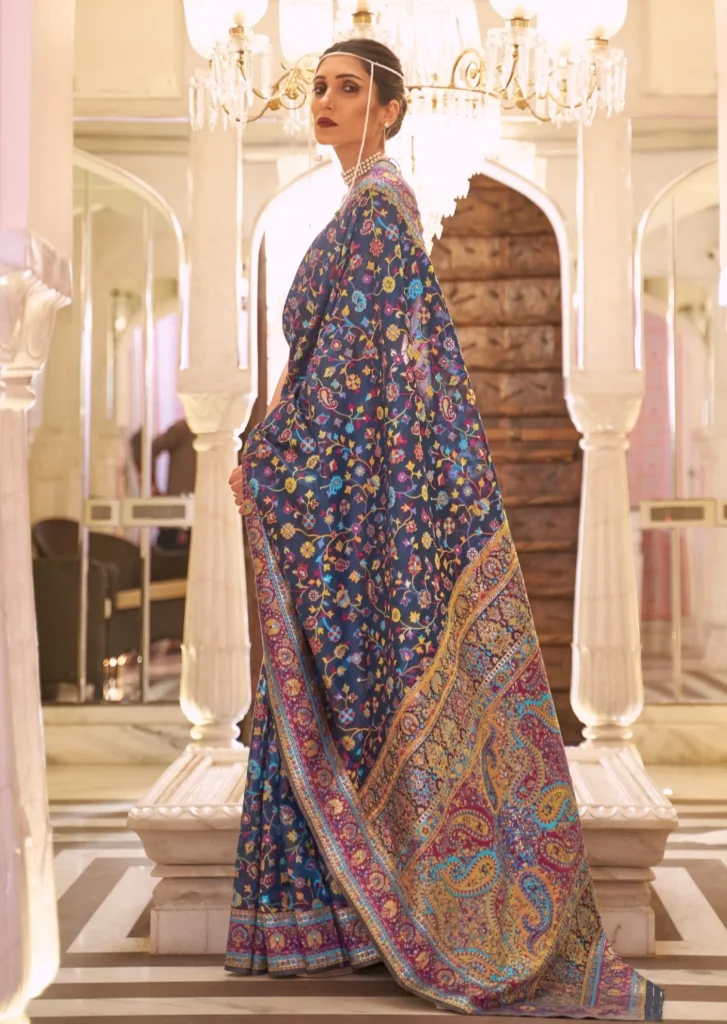
While contemporary fashion often associates Jamawar with fine wool shawls, a traditional Kashmiri Jamawar can also be crafted as a heavy silk Jamawar fabric. The defining characteristic isn’t just the raw material; it is the mind-bogglingly dense, tapestry-like weaving technique where the pattern is woven directly into the fabric, making it completely reversible.
The Mughal Influence: How Kings Shaped Kashmiri Craftsmanship
The story of the traditional Kashmiri Jamawar is deeply intertwined with royal patronage. While the foundations of the craft were laid in the 15th century under the benevolent rule of Sultan Zain-ul-Abidin, it was the Mughal Emperors who elevated the craft to a form of high art.
Akbar’s Obsession with the Two-Sided Shawl
Emperor Akbar was deeply enamored with Kashmiri craftsmanship. He was a passionate collector of these textiles and even introduced a brand new fashion trend in the Delhi courts called the Do-Shala (twin shawls). Akbar started the practice of wearing two distinct Jamawar shawls stitched back-to-back, ensuring that the messy reverse side of the hand-weaving was hidden, displaying gorgeous patterns on both sides.
Shah Jahan and the Floral Renaissance
Under Emperor Shah Jahan—the great builder and aesthetic perfectionist—the design language of the traditional Kashmiri Jamawar shifted. Moving away from rigid geometric bands, weavers began incorporating hyper-detailed, lifelike botanical illustrations, sweeping vines, and courtly floral motifs, reflecting the lush gardens of Srinagar.
The Masterpiece of Kani Weaving: A Feat of Human Patience
At the heart of the finest traditional Kashmiri Jamawar pieces lies an extraordinary handloom technique known as Kani weaving. If you think hand embroidery is difficult, Kani weaving will absolutely blow your mind.
Instead of using a traditional shuttle to throw thread across the loom, Kani shawl weavers use dozens of tiny, eyeless wooden spools called Kanis (or Tujis), made of forest wood. Each individual color in the design requires its own separate spool.
[Talim Code Read Aloud] ➔ [Weaver Moves Specific Color Wood Spool] ➔ [One Micro-Row Completed]
The Mystic Language of the Talim
Unlike modern weavers who look at a visual graph paper design, traditional Kani shawl weavers create masterpieces by reading a coded, written script called the Talim.
The master designer writes the pattern down in a rhythmic, poetic shorthand code that specifies exactly how many threads of which color must be woven across the loom. A master reader calls out the instructions aloud, and the weavers translate those spoken words into lightning-fast movements of their wooden spools.
Because this process is so intricate, a team of two master weavers working on a highly complex, all-over pattern can weave only about one inch of fabric per day. A single, fully covered wedding-grade traditional Kashmiri Jamawar shawl can easily take anywhere from one to three years of continuous, daily labor to complete.
Decoding the Paisley Motif History: The Soul of the Fabric
You cannot talk about Jamawar without discussing its most iconic visual element: the Kalka motif, globally recognized today as the paisley pattern. The evolution of this single design element is a fascinating masterclass in global cultural exchange.
[Persian Mango/Flame Concept] ➔ [Kashmiri Cypress Tree Symbol] ➔ [European 'Paisley' Craze]
- The Persian Roots: The motif originally started as the Boteh in Persian art, representing a stylized pinecone, a sprouting mango tree, or a droplet of sacred flame from ancient Zoroastrian traditions.
- The Kashmiri Adaptation: When the design arrived in northern India, local weavers transformed it to mimic the sweeping, graceful curves of the native Kashmiri Cypress tree, bending gently in a valley breeze.
- The Modern Silhouette: Over centuries, the shape evolved from a small, delicate, stiff leaf into an elongated, intricately swirling teardrop bursting with hundreds of micro-floral patterns inside its borders.
When you look at a traditional Kashmiri Jamawar, the way the paisley motifs are clustered together tells a story. Some layouts present a clean field with decorated borders (Palla), while the most luxurious versions, known as Jamal, feature an all-over, seamless web of intertwining vines where the base fabric disappears entirely beneath the glorious storm of colored threads.
Fabric Composition: Pashmina Wool vs. Pure Silk Jamawar Fabric
A common question among new collectors is: What is a real Jamawar made of? The answer depends entirely on the purpose of the garment and the region where it was woven. True to its historic versatile roots, the weave adapts beautifully to both warm luxury and winter warmth.
1. The Winter Luxury: Pashmina Wool Base
The most elite, museum-grade winter shawls are woven using pure pashmina wool, harvested by hand from the soft undercoat of the Changthangi goats that live high up in the freezing altitudes of Ladakh. When the incredible fine-gauge pashmina threads are woven using the Kani spool method, the result is a lightweight shawl that offers unmatched warmth and a buttery-soft texture against the skin.
2. The Festive Radiance: Pure Silk Jamawar Fabric
As the craft traveled down from the mountains into the festive plains of Varanasi and the royal clusters of Gujarat, artisans adapted the technique to create silk Jamawar fabric. Using pure, high-twist silk threads intermeshed with metallic zari wires, weavers developed a fabric that possessed a gorgeous, luminous sheen. Today, a silk Jamawar saree or heavy lehenga is a staple heirloom choice for modern Indian brides who want to exude classic, royal elegance on their big day.
The European Craze: How a Town in Scotland Stole the Name
By the late 18th and early 19th centuries, the traditional Kashmiri Jamawar had caught the attention of European royalty. Empress Joséphine, the glamorous wife of Napoleon Bonaparte, famously received a Kashmiri shawl as a gift and instantly fell in love with it. She single-handedly started a massive fashion craze across the high-society salons of Paris and London.
Every wealthy European woman desperately wanted to own a piece of this exquisite Indian luxury. However, because authentic hand-crafted pieces took years to make and cost a literal fortune, demand drastically outstripped supply.
To capitalize on this luxury craze, textile manufacturers in Europe looked for ways to mass-produce the look.
A town in Scotland called Paisley modified the newly invented, automated Jacquard mechanical loom to cheaply copy the intricate Indian patterns. Millions of cheap, machine-woven imitations flooded the global market, and ironically, the ancient Indian Kalka motif came to be known globally by the name of that Scottish town—Paisley!
Machine Replicas vs. Authentic Kashmiri Craftsmanship: The Shopping Test
Just like our previous discussion on Chikankari, the market today is flooded with factory-made computer replicas passing off as genuine heirloom weaves. If you are shopping for an authentic traditional Kashmiri Jamawar, use these three practical guidelines to ensure you are buying real art:
1. The Reverse Textures
- The Hand-Woven Kani: Flip the shawl over. On a real Kani weave, you will see small knots where the spools changed direction, and the pattern on the back will look almost as crisp and beautifully legible as the front.
- The Jacquard Machine Copy: A machine-made copy will have long, messy, loose threads running horizontally across the back of the fabric. These loose float threads snag easily on jewelry and indicate that a machine spit out the pattern all at once.
2. The Weight and Feel
An authentic pashmina-based Jamawar is shockingly lightweight and can easily pass through a finger ring, despite its dense design. A synthetic or machine-made acrylic copy will feel heavy, bulky, and stiff, often scratching the skin instead of wrapping it in a cloud-like softness.
3. The Price Reality
Let’s be honest about budgets. If a seller offers you a “100% pure hand-woven Kani Jamawar shawl” for ₹3,000, walk away. A true hand-loomed piece represents months of human life and will easily cost upwards of ₹25,000, stretching into lakhs for antique-grade work. Machine copies are perfect for fun, everyday casual wear, but they should never be priced or sold as authentic heritage items.
How to Style a Jamawar in 2026: The Modern Fusion Look
You don’t need to look like you walked straight out of a history museum to appreciate this textile! Modern Indian fashionistas are reinventing the traditional Kashmiri Jamawar for contemporary, everyday street style and corporate wear. Here are three fresh ways to style this historic fabric today:
- The Statement Blazer: Have an old, heavy silk Jamawar shawl that you rarely wear? Consider getting it tailored into a sharp, structured, modern blazer. Pair it with plain black trousers and a simple silk camisole for a jaw-dropping corporate gala look.
- The Minimalist Contrast: Let the weave do all the talking. Pair a heavily patterned, multi-colored Jamawar dupatta with an entirely monochromatic, solid white or deep navy-blue linen kurta set.
- The Modern Belted Drape: Instead of wrapping the shawl loosely around your arms, drape it neatly over one shoulder and secure it at your waist with a sleek, minimalist leather belt. This accentuates your silhouette while keeping the fabric elegantly in place.
Preserving the Masterpiece: Care Tips for Your Heirloom Weave
Because a traditional Kashmiri Jamawar is an investment piece meant to be passed down through generations, it requires meticulous care to prevent damage from moisture, dust, and fabric moths.
- Never Wash at Home: Whether it is a silk base or a fine wool base, home detergents can strip away the natural protective oils of the fibers. Always trust your pieces to a professional dry cleaner who specializes in premium heritage textiles.
- Store in Muslin Cloth: Avoid storing your precious shawls or sarees in plastic zip-lock bags, which can trap ambient moisture and cause mildew. Instead, wrap them neatly in a clean, breathable white cotton or muslin cloth.
- Refold Regularly: Never leave a heavy silk weave folded in the exact same position inside your wardrobe for years. The heavy weight can permanently crease and snap the delicate silk warp threads along the fold lines. Take the garment out every six months, let it air out in a shaded room, and refold it along different lines.
Wrapping Up: Honoring the Weavers of the Valley
The journey of the traditional Kashmiri Jamawar from a coveted royal textile to a global design icon is proof of the timeless power of exceptional human skill. When you purchase, style, or talk about these incredible fabrics, you aren’t just engaging in consumerism—you are actively keeping a centuries-old language of artistic expression alive.
Have you ever inherited an antique Jamawar piece from your mother or grandmother’s closet? How do you like to style heavy statement shawls for the festive season? Let me know your thoughts in the comments below—let’s keep the textile conversation going!
See Also
Beyond the Lehenga: Why the Pre-Draped Saree Trend is Dominating Gen Z Fashion
Sourcing Products At Wholesale Rate – The Secret Sauce