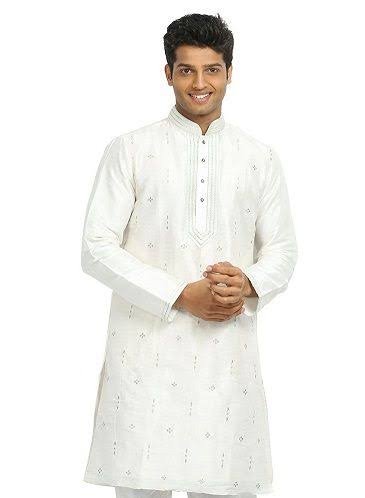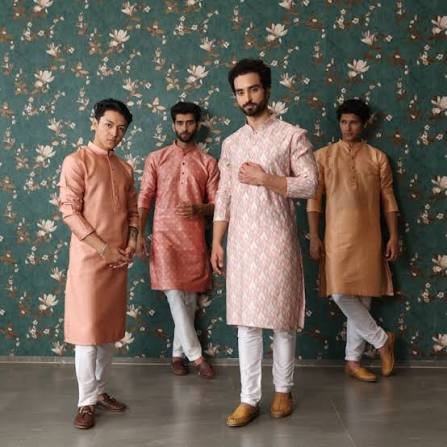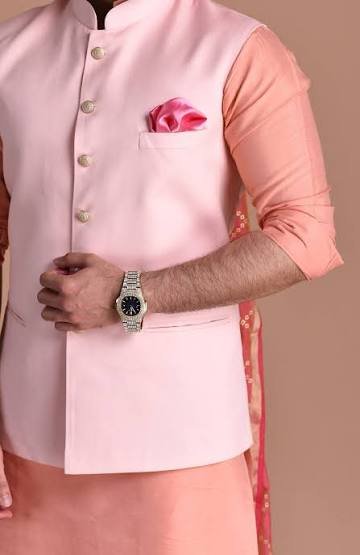

You are shopping for an Indian wedding, and every store seems to use the words sherwani, achkan and bandhgala differently. One website calls a knee-length coat an achkan, another lists a similar garment as an “achkan-style sherwani”, and a third places a short closed-neck jacket under Jodhpuri suits.
No wonder the sherwani vs achkan vs bandhgala comparison becomes confusing.
Here is the easiest answer:
A sherwani is generally a long, ceremonial wedding coat; an achkan is usually lighter, more fitted and traditionally formal; and a bandhgala is a shorter, structured closed-neck jacket that resembles an Indian suit.
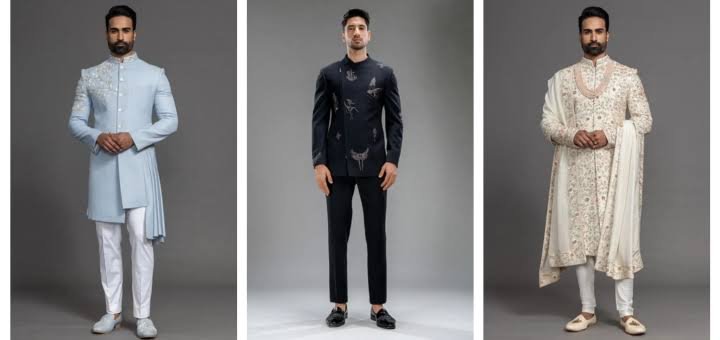
These descriptions are useful rather than absolute. Modern designers frequently combine traditional cuts and use terms such as “achkan sherwani”, so the boundaries between these garments are not always rigid. The best approach is to examine the garment’s length, cut, construction and styling instead of relying only on its product label. (Manyavar)
Sherwani vs Achkan vs Bandhgala: Quick Comparison Table
| Feature | Sherwani | Achkan | Bandhgala or Jodhpuri |
|---|---|---|---|
| Typical length | Knee-length or below the knee | Usually above, at or around the knee | Hip-length or slightly below the waist |
| Overall appearance | Grand, ceremonial and wedding-focused | Refined, fitted and understated | Sharp, tailored and suit-like |
| Cut | Straight, panelled or slightly flared | Close-fitting with less flare | Structured like a formal jacket |
| Embellishment | Often rich embroidery, zari, beads or brocade | Usually lighter or more controlled decoration | Minimal to moderate detailing |
| Best occasion | Main wedding ceremony | Engagement, formal ceremony or daytime wedding | Reception, cocktail party or formal dinner |
| Lower garment | Churidar, pyjama, straight trousers or dhoti pants | Churidar or narrow trousers | Matching tailored trousers |
| Footwear | Mojaris or juttis | Juttis, mojaris or dressy loafers | Oxfords, loafers, monk straps or polished juttis |
| Choose it when | You want a grand wedding look | You want subtle traditional elegance | You want an Indian alternative to a suit |
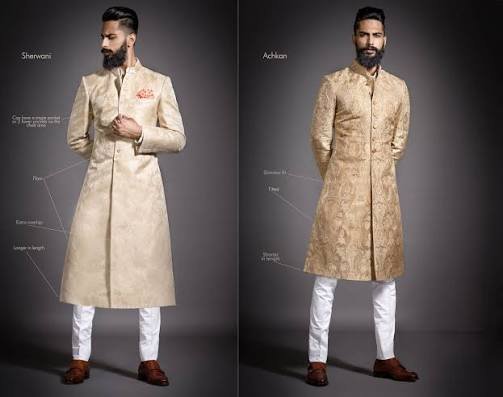
The quickest way to understand sherwani vs achkan vs bandhgala is to look at the length. The sherwani is generally the longest, the achkan sits in the middle, and the bandhgala is the shortest.
Garment-Length Diagram
SHERWANI                  ACHKAN                   BANDHGALA
Shoulder                  Shoulder                 Shoulder
   │                         │                        │
   │ Long ceremonial coat    │ Fitted formal coat     │ Short tailored jacket
   │                         │                        │
   │                         │                        └── Hip or below waist
   │                         └── Above or around knee
   └── Knee to below knee
Length does not explain every design difference, but it is a useful first check when you are standing in a trial room and wondering what you are actually wearing.
What Is a Sherwani?
A sherwani is a long, buttoned coat with a high or band collar. It is generally worn over a kurta or inner layer and paired with a churidar, pyjama or slim trousers.
In modern Indian weddings, it is one of the most recognisable outfits for the groom. Sherwanis commonly reach the knee or extend slightly below it, although contemporary designers experiment with shorter and longer versions. (Brides)quality of a sherwani is its ceremonial appearance. Wedding sherwanis may be made from:
- Raw silk
- Brocade
- Jacquard
- Velvet
- Silk blends
- Textured suiting fabric
They may feature zardozi, resham embroidery, metallic thread, beads, sequins, jewelled buttons or hand-finished motifs. A stole, safa, brooch, mala or kamarbandh can make the outfit even grander.
In the sherwani vs achkan vs bandhgala comparison, the sherwani usually has the strongest visual presence. It is designed to make the wearer look important, which is precisely why it remains a popular choice for the main wedding ceremony.
That does not mean every sherwani must be heavily embroidered. Minimal ivory, beige, sage green, powder blue and tone-on-tone sherwanis can look equally elegant. The main difference is that even a simple sherwani normally retains a long, ceremonial silhouette.
Choose a Sherwani If:
- You are the groom at the main wedding ceremony.
- You want an unmistakably traditional wedding outfit.
- The event is large, formal or richly decorated.
- You plan to wear a stole, turban, brooch or layered jewellery.
- You want your outfit to stand apart from those of the wedding guests.
What Is an Achkan?
An achkan is also a long, closed-neck coat, which is why the achkan vs sherwani difference can be difficult to spot.
In practical terms, an achkan is generally slightly shorter, more fitted and less flared than a sherwani. It often has a cleaner silhouette and more restrained embellishment. Fashion guides commonly describe it as offering a trimmed and structured appearance compared with the longer sherwani. (Brides) end just above the knee, directly at the knee or close to it. It is commonly paired with a churidar or narrow trousers.
The garment may include:
- Fine decorative buttons
- Woven jacquard motifs
- Tone-on-tone embroidery
- Subtle metallic detailing
- Contrasting collars or cuffs
- Side or centre openings
In sherwani vs achkan vs bandhgala, the achkan occupies the middle position. It is longer and more traditional-looking than a bandhgala but is normally quieter and less imposing than an elaborate groom’s sherwani.
An achkan is particularly suitable for engagements, wedding registrations, formal pujas, daytime weddings and family ceremonies. It gives you a distinguished Indian look without requiring you to carry a heavy embroidered coat for several hours.
Achkan vs Sherwani: Four Practical Differences
The easiest way to understand achkan vs sherwani is to compare these four features.
1. Length
An achkan is commonly shorter, ending above or around the knee. A sherwani generally reaches the knee or extends below it.
2. Fit
An achkan usually follows the body more closely. A sherwani may have a straighter or more relaxed lower section.
3. Flare
Sherwanis may use panels or additional volume below the waist. Achkans generally have less flare and create a narrower silhouette.
4. Decoration
A groom’s sherwani may carry extensive embroidery. Achkans generally favour controlled embellishment, elegant woven fabrics or cleaner surfaces.
However, these are not unbreakable rules. Designer collections increasingly use hybrid terms such as “achkan sherwani”. Always examine the actual garment before deciding.
Choose an Achkan If:
- You like traditional Indian menswear but dislike excessive decoration.
- You need an outfit for a daytime or semi-formal wedding.
- You want something that can be worn again.
- You prefer a fitted silhouette with a long, neat line.
- You are the groom, father of the groom or a close family member seeking understated elegance.
What Is a Bandhgala or Jodhpuri Suit?
A bandhgala is a structured, closed-neck jacket that normally ends at the hip or slightly below the waist. The name literally refers to its closed neck.
When a bandhgala jacket is paired with matching tailored trousers, the complete ensemble is commonly called a Jodhpuri suit. Some retailers use bandhgala for the jacket and Jodhpuri suit for the coordinated outfit, although the two names are frequently used interchangeably. (Deepees Jodhpur)hgala vs sherwani** comparison, a bandhgala has:
- A shorter body
- More defined shoulders
- A tailored chest
- A high closed collar
- A suit-like appearance
- Matching or coordinated trousers
It may be made from silk, velvet, wool, linen, jacquard or fine suiting material. Embroidery is often concentrated around the collar, buttons, pocket or one section of the chest rather than spread across the entire jacket.
The bandhgala is strongly associated with Jodhpur and developed into one of India’s most distinctive forms of formal tailoring. Its modern construction combines a closed Indian neckline with the structured finish of a tailored jacket. (Raghavendra Rathore Jodhpur)ferent types of Indian formal wear for men, the bandhgala is arguably the easiest to wear beyond a wedding. A plain navy, charcoal, black, bottle-green or burgundy bandhgala can work for a reception, cocktail evening, award ceremony, formal dinner or professional function.
Choose a Bandhgala If:
- You normally feel more comfortable in suits.
- You are dressing for a reception or evening event.
- You want an outfit with good re-wear value.
- You prefer formal leather shoes over traditional juttis.
- You want to look polished without appearing dressed like the groom.
Differences in Length, Cut and Construction
The central sherwani vs achkan vs bandhgala differences are visible in the overall silhouette.
Length of Indian Wedding Coats
A sherwani generally reaches the knee or extends below it. An achkan usually ends above, at or around the knee. A bandhgala ends close to the hip.
Shape Below the Waist
Sherwanis can be straight, panelled or gently flared. Achkans usually remain slimmer and closer to the body. Bandhgalas are constructed like jackets and therefore do not have a long lower section.
Shoulder Structure
A sherwani may have structured shoulders, but much of its impact comes from its length and decorative surface.
An achkan creates a clean vertical line through the torso.
A bandhgala relies more heavily on precise shoulder placement, chest shaping and suit-style tailoring.
Inner Layers
Sherwanis are frequently worn over a kurta or inner tunic. Achkans may also include a kurta-like inner layer, although modern versions can be simpler.
A bandhgala may be worn with a shirt, a short kurta, a waistcoat or a minimal collarless inner.
Level of Embellishment
In sherwani vs achkan vs bandhgala, the sherwani normally allows the richest ornamentation. The achkan favours refined and controlled decoration, while a bandhgala generally looks best with selective detailing.
Which One Should a Groom Wear?
For the main wedding ceremony, a sherwani is usually the safest traditional choice. Its long silhouette creates enough visual importance for the groom and balances a heavily dressed bridal look.
It also supports wedding accessories such as:
- A safa or turban
- Embroidered stole
- Brooch
- Mala
- Kamarbandh
- Mojaris or juttis
An achkan suits a groom who wants a lighter and more understated appearance. It is particularly effective for a daytime wedding, intimate ceremony, court marriage, temple wedding or summer function.
A bandhgala is ideal for an engagement, sangeet, cocktail night or reception. It may also be worn for the wedding itself when the ceremony is civil, intimate or deliberately minimalist. Bandhgalas are widely used for engagements and receptions because they combine Indian identity with formal tailoring. (Brides) between sherwani vs achkan vs bandhgala, consider:
- The bride’s outfit
- Size and style of the venue
- Day or evening function
- Local weather
- Length of the ceremony
- Overall wedding dress code
- Accessories you plan to wear
The groom should look coordinated with the bride, but the outfits do not have to match exactly.
Best Option for Indian Wedding Guests
Wedding guests should avoid accidentally competing with the groom. That makes a restrained achkan or bandhgala safer than a heavily embellished sherwani.
A brother, father or close family member can wear an achkan in navy, deep green, wine, ivory, charcoal or muted gold. Keep the embroidery tonal and avoid very elaborate malas, turbans or oversized brooches unless these are part of the family dress code.
For most other guests, a bandhgala with tailored trousers provides the right level of formality without looking excessive.
A simple sherwani can still work for a guest at a grand wedding. However, avoid heavily beaded ivory or gold styles that resemble traditional groom wear.
In the sherwani vs achkan vs bandhgala decision, the bandhgala is normally the most versatile choice for wedding guests.
Best Choice for Receptions and Formal Dinners
For a reception or formal dinner, the bandhgala is usually the strongest option.
Its short, structured form looks natural with tailored trousers and polished shoes. Dark solids, velvet collars, metallic buttons and subtle pocket embroidery are especially effective for evening functions.
An achkan is a suitable alternative when the reception has a more traditional dress code. Select a rich fabric but avoid combining it with too many ceremonial accessories.
A sherwani works well for the groom at a grand reception. For guests, however, it can sometimes feel unnecessarily elaborate.
In bandhgala vs sherwani, the bandhgala is more adaptable, easier to move in and simpler to wear again at future events.
Fabrics Used in Each Garment
Fabric affects both appearance and comfort. Do not choose an outfit based on embroidery alone.
Best Sherwani Fabrics
Common sherwani fabrics include:
- Raw silk
- Brocade
- Jacquard
- Velvet
- Silk blends
- Textured ceremonial fabrics
These materials hold embroidery well but may become heavy during long summer functions.
Best Achkan Fabrics
Achkans work particularly well in:
- Raw silk
- Linen-silk
- Cotton-silk
- Jacquard
- Lightweight wool blends
- Tussar-style textured fabrics
These fabrics support a fitted shape without creating unnecessary bulk.
Best Bandhgala Fabrics
Bandhgalas may be made from:
- Suiting wool
- Velvet
- Silk
- Linen
- Jacquard
- Blended suiting materials
For hot Indian weather, look for lightweight fabric, breathable construction and partial lining. For winter weddings in North India, velvet and wool blends can look sophisticated.
The best fabric in sherwani vs achkan vs bandhgala ultimately depends on the season, venue and number of hours you will be wearing the garment.
Trousers and Footwear Combinations
What to Wear With a Sherwani
Pair a sherwani with:
- Churidar for a traditional silhouette
- Straight trousers for a contemporary finish
- Pyjama bottoms for comfort
- Dhoti-style bottoms for an Indo-western look
Mojaris and embroidered juttis are the most natural footwear choices.
What to Wear With an Achkan
A churidar produces the classic achkan silhouette. Narrow ankle-length trousers make it appear more modern.
Complete the look with:
- Juttis
- Mojaris
- Velvet slip-ons
- Minimal loafers
What to Wear With a Bandhgala
Matching tailored trousers create a complete Jodhpuri suit. Black, ivory or charcoal trousers may also be worn when the jacket is the statement piece.
Suitable shoes include:
- Oxfords
- Loafers
- Monk straps
- Formal slip-ons
- Polished juttis
Whatever you choose in sherwani vs achkan vs bandhgala, check whether the jacket length, trouser taper and shoe shape work together.
Common Shopping Mistakes
1. Buying According to the Product Name
One brand’s achkan may resemble another brand’s sherwani. Examine the actual length, cut and construction.
2. Checking Only the Front
Look at the side and back during the trial. The coat should not pull across the shoulders, bunch below the collar or form horizontal creases around the buttons.
3. Ignoring Indian Weather
A heavily lined velvet sherwani may look beautiful but feel unbearable at an outdoor summer wedding. Ask about the garment’s weight and lining.
4. Matching Every Accessory
Coordination does not mean using one colour everywhere. Allow the coat, stole, buttons or footwear to act as the main feature.
5. Choosing the Wrong Proportions
An excessively long coat can overwhelm the wearer when poorly cut. An overly short bandhgala can make the torso appear boxy. Correct tailoring matters more than rigid height rules.
6. Forgetting Re-Wear Value
A richly embroidered sherwani may be perfect for one important day. A subtle achkan or bandhgala may serve several future functions.
Consider how often you will wear the outfit before making the final sherwani vs achkan vs bandhgala decision.
7. Skipping Alterations
Sleeve length, collar comfort, shoulder position and trouser taper can completely change the appearance of an outfit. An expensive garment still needs proper fitting.
Sherwani vs Achkan vs Bandhgala: Choose This If…
- Choose a sherwani if you are the groom and want a grand, ceremonial wedding outfit.
- Choose an achkan if you want fitted, traditional elegance without excessive weight or decoration.
- Choose a bandhgala if you want a sharp Indian formal suit for a reception, dinner or repeat wear.
A groom does not necessarily have to select only one. He may wear an achkan for the engagement, a sherwani for the wedding and a bandhgala for the reception.
That is why understanding the different types of Indian formal wear for men is useful when planning an entire wedding wardrobe.
Frequently Asked Questions
Is an achkan the same as a sherwani?
No. Both are long, closed-neck coats, but an achkan is generally shorter, closer-fitting and less flared. A sherwani is usually more ceremonial and may include heavier embroidery.
Modern retail labels sometimes overlap, so compare the actual design rather than relying only on its name.
What is the main difference between a bandhgala and a sherwani?
The main bandhgala vs sherwani difference is length and construction.
A bandhgala is a short, structured jacket worn with tailored trousers. A sherwani is a knee-length or longer ceremonial coat generally paired with a churidar, pyjama or slim ethnic trousers.
Is a Jodhpuri suit the same as a bandhgala?
The terms are frequently used together. More precisely, bandhgala may refer to the closed-neck jacket, while Jodhpuri suit often describes the complete outfit with coordinated trousers and, sometimes, a waistcoat.
Can a groom wear a bandhgala for his wedding?
Yes. A bandhgala is suitable for a civil ceremony, intimate wedding or modern minimalist celebration.
For a large traditional ceremony, many grooms prefer a sherwani because its longer shape looks more ceremonial.
Which is more comfortable: sherwani or achkan?
An achkan is often lighter and less voluminous, which may make it more comfortable for long functions.
However, comfort ultimately depends on the fabric, lining, weather and quality of tailoring.
Can a wedding guest wear a sherwani?
Yes, particularly at a formal wedding. Guests should avoid excessive embroidery or accessories that make the outfit look like groom wear.
An achkan or bandhgala is generally easier for a guest to style appropriately.
Which outfit is suitable for a shorter man?
Shorter men do not need to avoid any of these garments.
A clean, properly fitted achkan or sherwani with controlled length can create a strong vertical line. A bandhgala also works well when it fits neatly and does not end too high on the torso.
What is the best Indian formal wear for men at a reception?
A bandhgala or Jodhpuri suit is usually the most versatile reception outfit because it combines Indian styling with the sharpness of a formal suit.
The groom can select richer fabric or embroidery, while guests can keep the design minimal.
Final Verdict
The sherwani vs achkan vs bandhgala difference becomes much simpler once you stop relying entirely on shop labels.
A sherwani is the long and ceremonial wedding option. An achkan is a fitted, refined and normally lighter long coat. A bandhgala is a short, structured Indian formal jacket worn with tailored trousers.
For the main wedding ceremony, the sherwani generally leads. For understated traditional dressing, the achkan offers an excellent middle path. For receptions, dinners and repeat wear, the bandhgala is usually the most practical investment.
Most importantly, try the garment, inspect its construction and consider how it will feel after several hours.
The best answer to sherwani vs achkan vs bandhgala is ultimately the outfit that fits your body, occasion and personal style—not merely the name printed on its tag.
See Also
Sherwani Vs Achkan Vs Jodhpuri Bandhgala-a descriptive difference between silhouettes
Achkan Vs Jodhpuri Bandhgala | Types of Ethnic Clothing for Men in India
Nehru Jacket with Kurta Pajama: Colour Combinations That Actually Work
Tone-on-Tone Elegance: How to Style Monochromatic Indian Outfits for Corporate Spaces