
Hello, gorgeous souls, and welcome back to our textile sanctuary! If you look closely at your wardrobe today, you will probably see a lot of fast-fashion clothes made with toxic synthetic dyes and printed by giant metal machines. But what if we told you there is an ancient Indian textile that is so eco-friendly it actually treats your skin like royalty, uses ingredients found entirely in nature, and looks cooler with every single wash?
We are talking about traditional Ajrakh block printing.
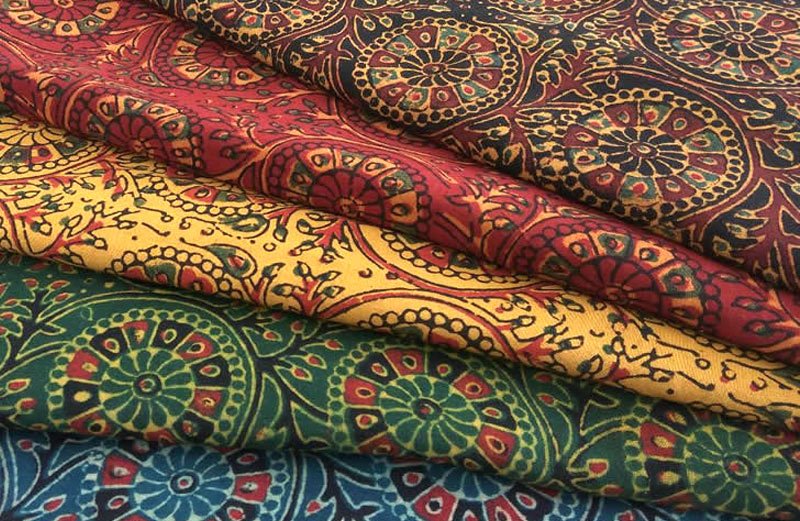
Steeped in the rich heritage of the Indus Valley Civilization, Ajrakh is more than just a printing style; it is a complex, 16-step scientific ritual practiced by master Kutch artisans in Gujarat and Rajasthan. The deep blues of natural indigo, the fiery reds of madder root, and the crisp white geometric outlines come together to form a cosmic map on fabric.
But how do artisans print crisp white lines on fabric using dark dyes? Why is this fabric considered a champion of sustainable fashion? And how can you style this heritage print in your modern, everyday wardrobe?
Let’s dive into the fascinating world of mud, fermentation, and wooden stamps to uncover the beautiful chemistry behind traditional Ajrakh block printing.
What is Ajrakh? The Cosmic Meaning Behind the Name
To understand the beauty of Ajrakh, we have to look at its roots. Scholars suggest the name Ajrakh comes from the Arabic word Azrak, which translates directly to “blue.” If you look at a classic Ajrakh piece, blue is always the anchoring soul of the fabric.
However, local artisans offer a much more poetic explanation. In the local Kutchi dialect, the phrase Aaj rakh literally means “keep it for today.” It refers to the slow, patient nature of the craft, where the fabric must rest, ferment, and absorb the sun at every single stage of production.
The design language of a traditional Ajrakh block printing masterpiece is heavily inspired by ancient astronomy. The dark indigo background represents the night sky, the deep red hues symbolize the setting sun, and the tiny, white un-dyed patterns mirror stars scattered across the universe.
The 16-Step Resist Printing Process: Where Alchemy Meets Artistry
Many people assume block printing is as simple as dipping a stamp in paint and slamming it onto a white sheet of cotton. With Ajrakh, the process is completely reversed. It relies on a highly sophisticated chemical technique called the resist printing process, where the artisan prints a protective paste onto the fabric to prevent certain areas from absorbing the dye.
The fabric goes through an intensive journey before it is ready to be styled:
[Scouring & Harda Treatment] ➔ [Lime & Gum Resist Printing] ➔ [Fermented Iron & Indigo Dyeing] ➔ [River Washing]
1. Preparing the Canvas (Saaj and Harda)
First, raw cotton fabric is washed repeatedly with camel dung, soda ash, and castor oil to strip away natural impurities and soften the fibers. It is then treated with Harda (myrobalan nut powder), which provides natural tannins. This creates a pale yellow base that acts as a natural primer, allowing the upcoming dyes to bind permanently with the cotton.
2. Printing the Resist (Kiryan and Asal)
Artisans use beautifully detailed, hand-carved wooden blocks made of teak or rosewood. They stamp a mixture of lime (calcium thickener) and Arabic gum onto the cloth. This thick paste seals the fabric. When the fabric is dropped into dark dye vats later, these stamped areas stay perfectly clean and white.
3. The Natural Dye Vats
- The Black Ink (Kat): Made by fermenting scrap iron, jaggery (raw sugar), and water in a jar for over twenty days. The resulting iron-rich liquid reacts instantly with the tannin primer on the fabric, turning into a rich, permanent jet black.
- The Red Hues (Kan): Derived by boiling alum with madder root, tamarind seed paste, and alizarin.
- The Royal Blue: Sourced from organic, living natural indigo dye vats that are kept active for years through continuous fermentation.
Fabric Performance: The All-Weather Textile That Breathes
One of the most extraordinary characteristics of a garment made via traditional Ajrakh block printing is its thermal intelligence. Because the fabric base is strictly pure cotton, silk, or modal linen, and the dyes are entirely plant-based, the textile interacts beautifully with human body heat.
[Summer Season] ➔ Expels heat, open pores breathe ➔ Cool effect
[Winter Season] ➔ Traps body warmth within layers ➔ Cozy effect
Unlike synthetic fabrics printed with heavy plastic inks that seal off air circulation, Ajrakh fabrics feature open pores. In the blistering heat of an Indian summer, the fabric breathes, wicking away sweat and keeping you cool. In the winter, the dense layers of natural organic matter help trap body heat, keeping you surprisingly cozy. This making it an absolute holy grail for sustainable, year-round fashion.
Decoding the Patterns: The Rules of Islamic Geometric Patterns
If you look closely at an Ajrakh kurti, saree, or scarf, you will notice a striking difference between it and other Indian prints like Jaipur’s floral Sanganeri. Ajrakh patterns are highly mathematical, utilizing complex geometric patterns, webbed stars, trefoils, and repeating medallions.
This design aesthetic flourished because the printing communities (Khatris) converted to Islam centuries ago. Out of respect for the tradition of avoiding human or animal forms in art, the artisans channeled their creativity into mesmerizing symmetry.
Each block must align flawlessly with the next; a single millimeter of error by the artisan’s hand breaks the entire geometric flow of the fabric, requiring a level of concentration that few modern printers can match.
The Authenticity Checklist: How to Separate Hand-Blocked Ajrakh from Screen Fakes
Because sustainability is trending big time, mass-market factories are using digital screen-printing machines to churn out cheap polyester fabrics featuring fake Ajrakh designs. To make sure you are supporting genuine traditional Ajrakh block printing and helping local weaving families, use this quick checklist:
1. Check for the Smell of Nature
Smell the fabric! Screen fakes smell like industrial chemicals, petroleum, or synthetic ink. A genuine, hand-dyed Ajrakh piece carries a faint, earthy aroma of fermented iron, sweet jaggery, raw mud, and natural indigo.
2. Look for the Happy Imperfections
Because a human being manually presses a wooden block onto the fabric thousands of times, you will naturally find tiny human variations. Look closely at the edges of the motifs; you might see minor color overlaps or a tiny gap where the block met the grid line. These “happy accidents” are proof of authentic human labor.
3. The Reverse Side Penetration
- Hand-Dyed Original: Because the fabric is completely submerged in natural indigo and madder dye vats, the rich colors bleed completely through the cloth. The back of the fabric will look almost as vibrant as the front.
- Screen Printed Fake: The synthetic ink is rolled strictly onto the top surface of the cloth. If you flip the fabric over, the reverse side will look pale, white, and completely blank.
Modern Wardrobe Integration: Styling Ajrakh in 2026
You don’t have to save your Ajrakh pieces just for ethnic festivals! The rich earthy tones of deep indigo blue, charcoal black, and crimson red make traditional Ajrakh block printing incredibly easy to transition into contemporary urban fashion.
Here are three stunning ways to style it this week:
- The Trench Coat / Kimono Statement: Buy a few meters of heavy Ajrakh cotton fabric and get it tailored into an open-front long kimono or a lightweight summer trench coat. Throw it over a simple white crop top and distressed blue denim jeans for an effortlessly chic look.
- The Corporate Fusion Saree: Wear an Ajrakh modal silk saree to your next major business presentation. Modal silk has a gorgeous, fluid drape that doesn’t crease easily, giving you a sharp, polished, yet deeply cultural silhouette.
- The Edgy Streetwear Vibe: Men can rock an oversized, half-sleeve Ajrakh printed shirt over a black graphic tee, finished off with classic white sneakers and silver rings for a high-end streetwear aesthetic.
Caring for Your Eco-Friendly Natural Masterpiece
Because your Ajrakh garment is colored using living plant extracts and natural mineral salts instead of harsh industrial setting chemicals, it needs a little bit of mindful maintenance during laundry day:
- The First Wash Separation: Natural dyes (especially indigo) will always release a little bit of excess surface color during their first couple of washes. Always wash your new Ajrakh pieces separately in cold water to prevent color transfer onto your other clothes.
- Use Rock Salt to Set Colors: Pro tip! Soak your brand new Ajrakh outfit in a bucket of cold water mixed with two tablespoons of regular rock salt for 15 minutes before its very first wash. Salt acts as a natural mordant, locking the plant dyes securely into the cotton fibers.
- Never Use Bleach: Harsh chemical detergents and bleach will completely destroy plant-based colors, turning your rich indigo and crimson into faded grey patches. Stick to mild, pH-neutral liquid detergents.
Wrap Up: Wear a Piece of the Earth
When you put on a piece of clothing crafted through traditional Ajrakh block printing, you are literally wearing elements of the earth—mud, water, roots, and iron. It is a beautiful way to ground yourself, respect the environment, and celebrate the incredible technical genius of India’s rural artisans.
Do you prefer the deep, moody blues of indigo or the warm, fiery reds of madder root in your wardrobe? How do you plan on styling your next block-printed outfit? Tell us down in the comments below—we love reading your style ideas!
See Also
The Wedding Guest Blueprint: How to Style an Anarkali Suit Without Looking Overdressed
Ajrakh Block Print Process