
Hello, my fellow festive curators! We have all been there. You open a gorgeous gold-embossed envelope, and there it is: an invitation to a close friend’s or cousin’s big fat Indian wedding. Instantly, your mind starts racing through outfit options. You want something that feels incredibly majestic and celebratory, but you also don’t want to accidentally compete with the bride or spend the entire night tripping over a massive, heavy lehenga skirt.
Naturally, you reach for the undisputed queen of regal comfort: the Anarkali.
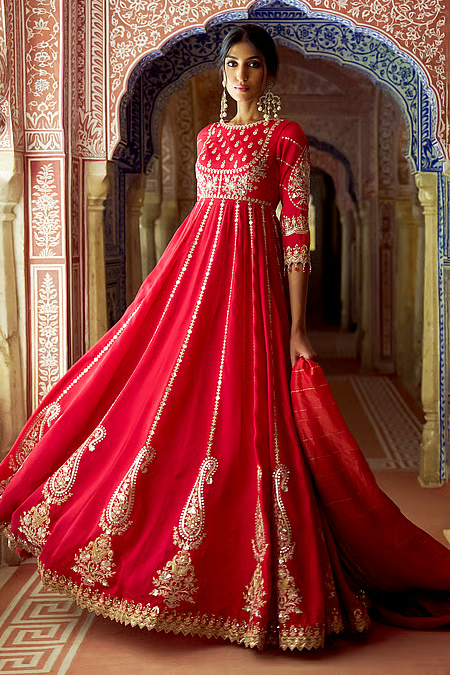
With its grand, royal silhouette originating from the Mughal courts, styling an Anarkali suit is the ultimate way to serve instant elegance. The sweeping floor-length flare, the fitted bodice, and the graceful movement make it a timeless classic. However, because these floor-length ensembles pack a lot of volume and fabric, it is incredibly easy to cross the line from “elegantly dressed wedding guest” to “looking like you are trying to be the bride.”
So, how do you handle styling an Anarkali suit while maintaining a sophisticated, effortless balance?
Let’s unpack the ultimate guest blueprint for navigating complex wedding guest dress codes using smart tailoring, color theory, and clever accessorizing!
The Golden Principle: The Art of Balancing Heavy Silhouettes
The biggest mistake most wedding guests make when styling an Anarkali suit is trying to make every single element of the outfit a showstopper. If your suit features a 5-meter flare, and your dupatta is covered in heavy zardozi, and you are wearing a massive polki choker set, your visual identity gets completely lost in the noise.
In fashion design, true sophistication is all about tonal balance.
[ Heavy, Voluminous Anarkali Flare ] ➔ Pair With ➔ [ Sleek Hair + Minimalist Jewellery + Nude Heels ]
When you are working with a silhouette that naturally commands attention due to its sheer scale, your styling choices must whisper rather than scream. By keeping your grooming minimal, your jewelry targeted, and your fabric textures thoughtful, you can rock a grand regal structure while looking incredibly modern and under-control.
Selecting Your Fabric and Hue: The Guest-Appropriate Edit
The secret to not looking overdressed starts long before you pick out your jewelry—it starts with the color palette and fabric construction you choose to put on.
When curating your contemporary festive wardrobe for an upcoming wedding, steer clear of heavily saturated bridal reds, deep maroons, and solid bridal golds. Instead, dive into these sophisticated, high-end guest alternatives:
1. The Jewel-Toned Monochromes
If the wedding is an evening affair, go for deep, moody jewel tones like royal navy, emerald green, or rich plum. A solid silk Anarkali in these shades looks incredibly expensive and regal without needing a single bead of heavy embroidery.
2. The Whimsical Pastels
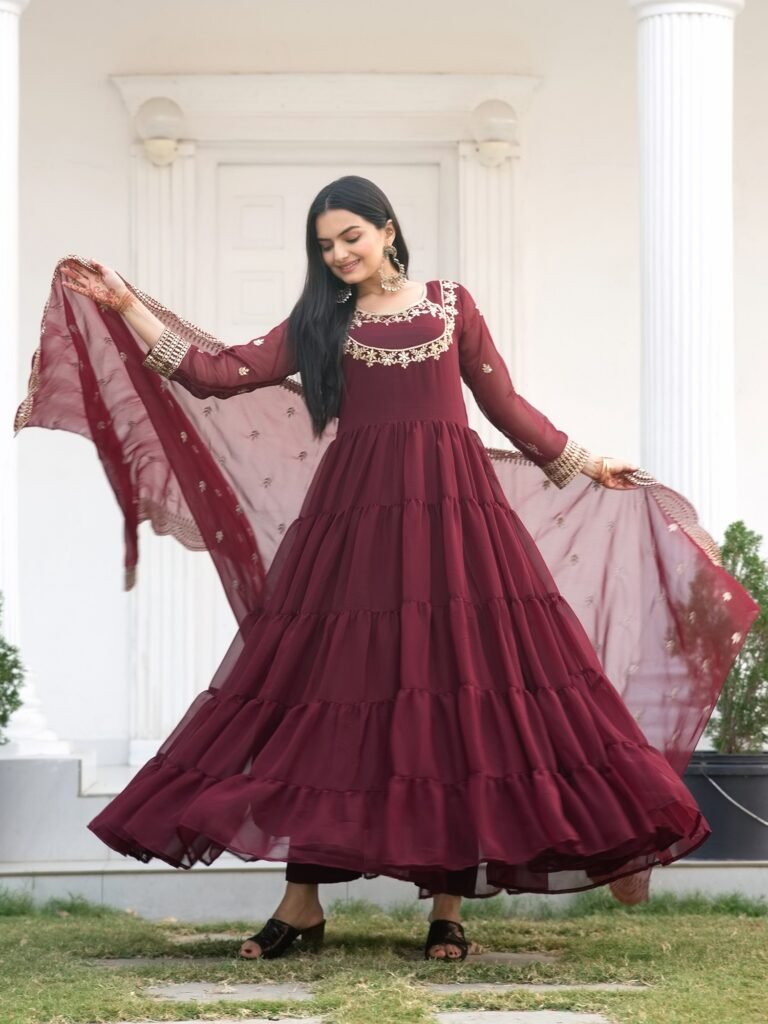
For morning haldi, mehendi, or daytime beach weddings, lighter fabrics are your best friend. Look for mint green, dusty peach, lavender, or powder blue. A georgette or organza Anarkali in a pastel hue catches the sunlight beautifully and keeps your silhouette looking airy and light rather than bulky.
3. The Ivory & Champagne Exception
While white is traditionally avoided at western weddings, a stunning ivory or champagne-toned lucknowi chikankari Anarkali paired with a subtle metallic border is the epitome of understated luxury for an Indian wedding guest, provided it isn’t covered in bridal red accents.
4 Blueprint Rules for Styling an Anarkali Suit as a Guest
Ready to build your look? Follow these four essential styling rules to ensure your ensemble stays perfectly polished from the welcome drinks to the late-night baraat dance session:
Rule 1: Master the Dupatta Drape
How you handle your dupatta can completely change the vibe of your suit. Instead of spreading a heavy dupatta wide across both shoulders (which creates a massive, blocky shape), use a one-sided shoulder drape. Pleat the dupatta neatly, pin it to your left shoulder, and let it fall straight. This cuts down the visual width of the outfit and creates a sleek, slimming vertical line.
Rule 2: Focus on Minimalist Ethnic Jewellery
If your Anarkali features an embroidered neckline or a high collar, skip the heavy necklace entirely! Instead, center your look around one major statement piece.
Pair a bare neckline with dramatic, oversized chandbalis or heavy jhumkas. If you prefer a necklace, choose a single delicate kundan choker and leave your ears bare. Let one accessory do the heavy lifting while the others step back.
[ Embroidered High-Neck Anarkali ] ➔ Skip the Choker ➔ Opt for Grand Statement Chandbalis
Rule 3: Invest in High-Quality Footwear Architecture
An Anarkali is a long garment, and the way the hem falls against the floor defines your posture. Avoid chunky, heavy wedges that can peep out clunkily from beneath your gorgeous panels. Instead, reach for pointed-toe metallic heels, slim stiletto sandals, or premium hand-crafted embellished juttis that match the exact tone of your hemline.
Rule 4: Keep Hair and Makeup Clean
Because the clothes pack massive volume, avoid loose, overly voluminous curls which can clutter your neckline. Opt for a sleek, low-centered structural bun, a polished high ponytail, or a clean middle-parted straight look. Keep your makeup luminous and dewy, focusing on a single statement lip color or a soft smoky eye, never both.
Fabric Performance: Staying Comfortable Through the Festivities
Let’s look at a practical breakdown of how different fabrics perform when you are navigating long wedding events. Choosing the right material ensures your panels drape fluidly without adding unnecessary bulk to your frame:
| Fabric Material | Flare Volume | Best Wedding Event | Wrinkle Resistance | Guest Vibe |
| Pure Chanderi Silk | Medium & Structured | Sangeet / Main Pheras | High | Classic, Old-Money Royalty |
| Viscose Georgette | High & Fluid | Mehendi / Cocktail Night | Excellent | Romantic, Easy to Dance In |
| Organza Silk | High & Crisp | Day-time Brunch / Roka | Medium | Ultra-Modern, Editorial, Edgy |
| Fine Mulmul Cotton | Light & Breezy | Haldi / Pool Party | Low | Effortless, Bohemian Elegance |
The “Not-Overdressed” Checklist Before You Leave the Room
Before you step out of your room and head down to the wedding hall, stand in front of a full-length mirror and complete this quick evaluation check to ensure your outfit harmony is absolutely flawless:
- The Sound Test: Walk around the room for ten seconds. Are your bangles, anklets, and outfit embellishments making an intense clinking sound? If your clothes are making more noise than the wedding music, remove the bangles and stick to a single, elegant watch or cuff.
- The Neckline Sanity Check: Is your jewelry overlapping with the embroidery of your dress? If your necklace is fighting with the zari on your collar, take off the necklace. A clean, bare neck looks far more sophisticated than a cluttered one.
- The Movement Test: Can you lift your arms and turn around comfortably without your dupatta or panels getting caught in your footwear? A guest who looks comfortable and relaxed is instantly the most stylish person in the room.
Wrap Up: Confidence in Every Panel
At the end of the day, styling an Anarkali suit for a wedding is all about celebrating the grandeur of Indian textiles while letting your unique personality lead the way. By choosing sophisticated, muted color palettes, prioritizing fabric fluidity over massive volumes of stiff canvas, and editing your accessories down with restraint, you can achieve a look that feels incredibly royal, effortless, and perfectly respectful of the couple’s big day.
What is your absolute go-to color when attending an ethnic wedding event? Do you prefer a classic floor-sweeping silhouette or a contemporary calf-length Anarkali paired with tailored pants? Tell us all about your wedding style favorites in the comments below—let’s keep styling together!
See Also
Canvas of Coziness: How to Master the Dupatta Saree Trend This Festive Season
Directory of Distributors, Wholesalers, Superstockists