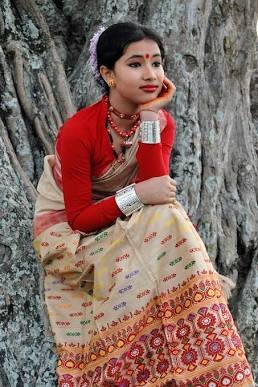
A saree is normally one continuous length of fabric, while a Mekhela Chador is a two-piece Assamese garment. The lower cylindrical piece is the mekhela, and the upper draped piece is the chador or sador.
When you look at someone wearing a Mekhela Chador vs saree from a distance, it is easy to mistake one for the other. Both offer a timeless, elegant silhouette, grace Indian festivities, and feature breathtaking handloom weaving. However, step a little closer and you will realize that their structural design, draping technique, and regional heritage could not be more distinct.
Whether you are looking to expand your traditional wardrobe, preparing for Bihu celebrations, or simply curious about ethnic wear from Northeast India, this comprehensive guide covers everything you need to know about the Mekhela Chador vs saree debate.
1. Quick Difference Table: Mekhela Chador vs Saree
If you are short on time, here is a quick cheat sheet summarizing the difference between Mekhela Chador and saree:
| Feature | Mekhela Chador | Saree |
| Structure | 2-Piece Garment (Mekhela + Chador) | 1-Piece Continuous Fabric |
| Length | Mekhela (~2m tube), Chador (~2.75m) | 5.5 to 9 Yards (5m to 8.2m) |
| Cultural Origin | Assam (Northeast India) | Pan-Indian (Varied regional styles) |
| Pleat Direction | Lower pleats fold to the Right | Lower pleats fold to the Left (Nivi style) |
| Petticoat Need | Essential for tucking, but lower skirt is pre-stitched tube | Mandatory base skirt (Petticoat/Inskirt) |
| Primary Fabrics | Muga Silk, Eri Silk, Pat Silk, Cotton | Banarasi, Kanjeevaram, Chiffon, Georgette, Cotton |
| Key Festivals | Bohag Bihu, Magh Bihu, Assamese Weddings | Diwali, Durga Puja, Weddings nationwide |
2. Components of a Mekhela Chador
Understanding Assamese traditional dress women wear starts with recognizing the distinct components of the Mekhela Chador. Unlike a standard drape, this attire consists of two primary unstitched and semi-stitched pieces:
- The Mekhela (Lower Garment): This is a wide, cylindrical tube of fabric worn from the waist down. It is fitted around the waist using neat, criss-cross pleats folded toward the right side and tucked securely into an inskirt.
- The Chador or Sador (Upper Garment): A long, rectangular drape (around 2.75 meters) that covers the upper body. One end is tucked into the Mekhela at the waist, while the remaining portion is pleated over the left shoulder, falling gracefully down the back.
- Riha (Optional Traditional Drape): In traditional Assamese bridal wear or high ceremonial setups, a thin silk strip called a Riha is worn wrapped tightly around the waist or chest beneath the Chador.
3. Components of a Saree
The saree is perhaps India’s most iconic ensemble, loved across the world for its fluid versatility. Its standard components include:
- The Continuous Length (5.5 to 9 Yards): A single, seamless swath of cloth containing three main zones—the Tuck-in end (inner body), the Field/Body (middle patterned area), and the Pallu (the decorative end drape).
- The Petticoat (Inskirt): An essential drawstring undergarment that anchors the saree’s waist pleats.
- The Blouse (Choli): A fitted top piece tailored to complement the saree’s weave, colors, and border patterns.
4. Difference in Construction: Two-Piece vs Single Continuous Drape
When analyzing Mekhela Chador vs saree, construction is the core point of divergence.
A standard saree relies entirely on clever draping, pleating, and wrapping of a single uncut piece of fabric. If you unpin a saree, it returns to one long straight runner.
In contrast, the difference between Mekhela Chador and saree lies in modularity. The lower Mekhela is already stitched into a tubular circle (similar to an ungathered sarong or straight skirt). Because the bottom half is pre-formed into a cylinder, it stays in place far more securely than a tucked saree skirt. The upper Chador operates independently, allowing freedom of movement without pulling at the hem of the skirt.
5. Step-by-Step Draping Process: How Mekhela Chador is Worn
Curious about how Mekhela Chador is worn compared to a classic saree drape? While a saree is tucked in a counter-clockwise spiral, draping a Mekhela Chador follows a specific two-stage technique.
1.Step 1: Step into the Mekhela:Lower body base setup.
Step inside the cylindrical stitched Mekhela tube like a skirt over your petticoat. Center the fabric so equal slack exists on both sides of your waist.
2.Step 2: Fold the Right-Facing Pleats:Unique pleating direction.
Unlike a saree (where pleats face left), gather the extra fabric of the Mekhela into wide, crisp pleats folded to the RIGHT. Tuck these pleats firmly into your petticoat drawstring at the navel.
3.Step 3: Anchor the Chador:Upper body drape foundation.
Take one corner of the Chador (the upper cloth) and tuck it into the left side of your waist, slightly overlapping the Mekhela pleats.
4.Step 4: Wrap and Pleat the Shoulder:Final pallu adjustment.
Wrap the remaining Chador around your lower back, bring it under your right arm, across your chest, and drape it neatly over your left shoulder. Pin it securely at the shoulder seam.
6. Indigenous Silks: Muga, Eri, Pat, and Cotton Varieties
The rich heritage of Assamese traditional dress women wear is deeply tied to Assam’s indigenous silk production. When comparing silk varieties in a Mekhela Chador vs saree, Assam’s native weaves offer textures and lusters found nowhere else on earth.
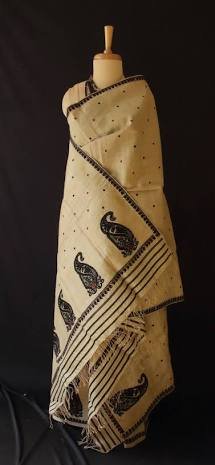
- Muga Silk (Golden Silk): Unique to Assam, Muga silk is naturally golden yellow and gets glossier with every wash. It is extremely durable and used primarily for grand occasions and weddings.
- Pat Silk (Mulberry Silk): Brilliant white or off-white silk that takes vibrant dyes effortlessly. Pat silk Mekhela Chadors often feature intricate Kinkhap (royal motif) or botanical hand-woven threadwork.
- Eri Silk (Ahimsa Silk): Known as peace silk because the moth leaves the cocoon naturally before harvesting. Eri silk is warm, soft, and feels like fine wool or spun silk—perfect for cooler seasons.
- Cotton & Toss Varieties: For daily wear or humid summer days, lightweight handloom cotton and blended Toss-Pat sets are widely preferred for their breathability and structure.
7. Festival & Occasion Guide: Bihu and Wedding Use
Choosing between a Mekhela Chador vs saree often depends on the cultural context and occasion.
Bohag Bihu & Cultural Festivals
During Rongali (Bohag) Bihu in spring, women wear traditional off-white or cream Pat/Muga Mekhela Chadors embellished with bright red (Ronga) motifs. The two-piece structure allows dancers to execute energetic Bihu dance movements without the risk of tripping over a saree hem.
Assamese Weddings
An Assamese bride almost exclusively wears a pristine white and gold Pat or Muga Mekhela Chador adorned with traditional gold jewelry. While sarees are popular for general Indian wedding receptions, the Mekhela Chador remains non-negotiable for traditional Assamese rituals.
8. Blouse and Jewellery Styling Tips
To elevate your look whether you choose a Mekhela Chador vs saree, pair your ensemble with authentic regional accents:
Styling a Mekhela Chador
- Blouse: Traditionalists prefer elbow-length sleeves matching the main base color or contrast border motifs. Modern twists include brocade or sweetheart necklines.
- Jewellery: Pair with iconic Assamese gold jewelry such as Lokaparo (pigeon-motif pendant), Doogdoogi (heart-shaped neckpiece), Joni Biri, and Gamkharu (large silver/gold cuffs).
Styling a Saree
- Blouse: Highly versatile—ranging from sleeveless crop tops and backless blouses to classic high-neck cuts.
- Jewellery: Pairs seamlessly with Kundan, Temple jewelry, Polki, or oxidized silver depending on the saree’s regional origin (e.g., Temple jewelry for Kanjeevarams, Kundan for Banarasis).
9. Can a Mekhela Chador Be Styled Like a Saree?
A common question among fusion fashion lovers is whether you can drape a Mekhela Chador like a saree—or vice versa.
While you cannot convert a 6-yard saree into a two-piece Mekhela Chador without cutting it, you can achieve a saree-like look with a Mekhela Chador! By letting the upper Chador fall loosely over the waist rather than wrapping it tightly, the final look closely mirrors a classic Nivi-draped saree.
Additionally, modern designers now offer pre-stitched Mekhela Chadors, allowing fashion enthusiasts outside Northeast India to step into the garment effortlessly without learning complex pleating.
10. How to Buy the Correct Size
Because a saree is a long single sheet, one size fits all. But when buying a Mekhela Chador online, pay attention to the following measurements:
- Mekhela Width & Length: Check the circumference of the unstitched or pre-stitched tube. Standard Mekhelas accommodate waist sizes up to 40-44 inches easily once pleated.
- Chador Length: Ensure the Chador is at least 2.75 meters long so you have enough fabric for both waist tucking and a generous shoulder drape.
- Unstitched vs. Semi-Stitched: Most authentic Assamese handloom sets arrive semi-stitched (the Mekhela ends need side stitching, and the Chador borders need edging/palla finishing).
11. Care Instructions for Silk Varieties
Preserving fine handloom silk requires gentle, attentive care:
- Muga and Pat Silk: Always dry-clean your high-end Muga and Pat silk sets. Store them wrapped in clean cotton or muslin cloth away from direct sunlight.
- Eri Silk: Can be hand-washed gently in cold water using a mild silk-safe detergent. Never wring or twist Eri silk.
- Ironing: Iron on the reverse side using low to medium heat settings, or use a steamer to protect hand-woven threadwork.
12. Frequently Asked Questions
Is Mekhela Chador suitable for non-Assamese women?
Absolutely! The Mekhela Chador is loved across India for its elegant structure, comfort, and striking handloom motifs. It is a fantastic choice for festive gatherings, cultural events, and weddings.
Why do Mekhela pleats fold to the right instead of the left?
Traditional Assamese aesthetics mandate right-facing pleats for the Mekhela. This structural alignment allows the upper Chador drape to flow naturally across the torso without overlapping or bunching against the lower pleats.
Which is easier to wear: Mekhela Chador or saree?
Most beginners find the Mekhela Chador easier to manage because the lower section is a closed cylindrical tube. You do not have to worry about the skirt slipping open at the bottom hem while walking.
See Also
- Mekhela Sador Vs Saree? Here is how to wear a Mekhela Sador or Mekhela Saree
- Step-by-Step Guide: How to Wear a Mekhela Sador (for beginners) | Embrace Assamese Elegance
- How to Style a Phulkari Dupatta with Plain Suit: 15+ Outfit Ideas & Styling Tips
- Kasavu Saree Blouse Colour Combinations: 15 Traditional and Modern Ideas
- Tant vs Jamdani Saree: Difference in Weave, Weight and Occasion