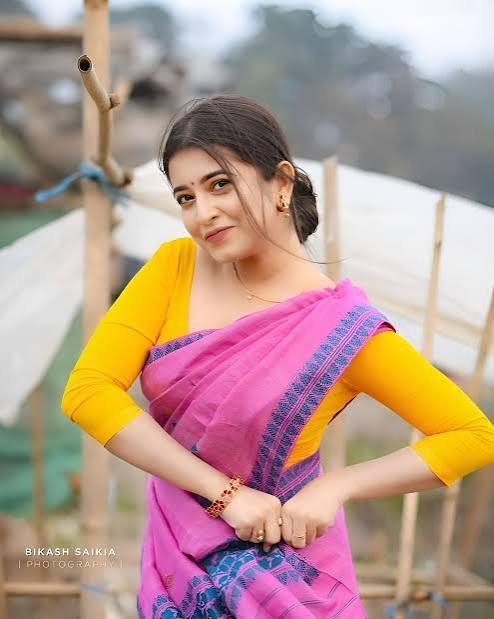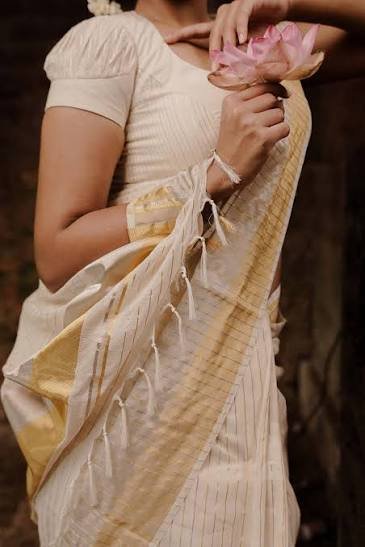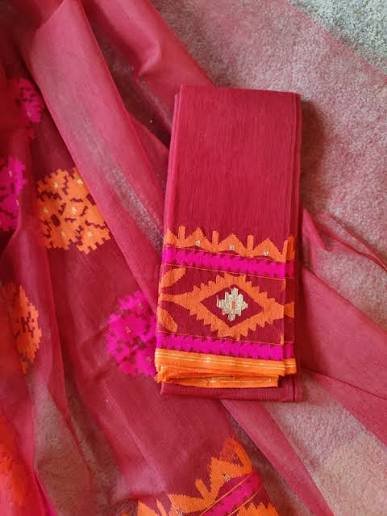

Kota Doria is usually lighter, airier and more transparent, making it especially comfortable in extreme heat. Chanderi has a smoother finish and richer sheen, making it more suitable for office functions, festivals and semi-formal summer occasions.
That is the short answer to the Kota Doria vs Chanderi debate.
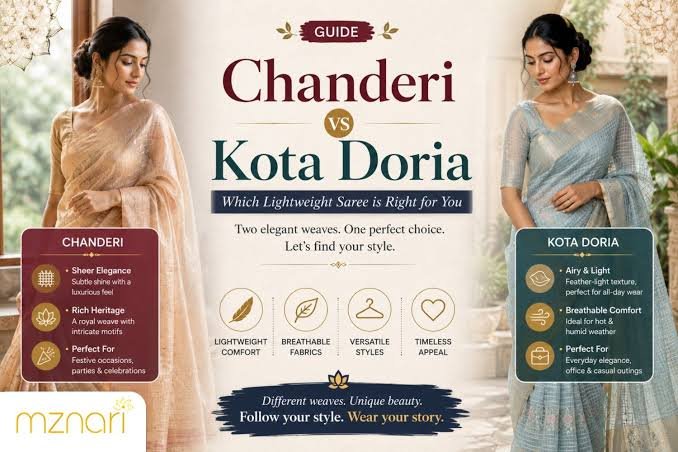
But if you are actually standing in a saree shop or scrolling through dozens of handloom listings online, the choice becomes a little more complicated.
Both fabrics are light. Both have a certain transparency. Both have strong Indian handloom identities. And both can rescue you from the misery of wearing something heavy during a May wedding or humid July office function.
They simply do different jobs.
Kota Doria is about airiness, feather-light comfort and an almost weightless feel. Chanderi is about lightness with polish, sheen and a slightly dressier appearance.
So, should you buy Kota Doria or Chanderi for summer? Let us compare them properly.
Quick Comparison: Kota Doria vs Chanderi
| Feature | Kota Doria | Chanderi |
|---|---|---|
| Overall feel | Extremely light and airy | Lightweight, smooth and refined |
| Best season | Peak summer and hot weather | Summer and warm festive weather |
| Breathability | Excellent | Very good |
| Transparency | Usually quite sheer | Sheer to semi-sheer |
| Surface | Distinctive small checks or khat | Smooth, lustrous surface |
| Drape | Light, floating and easy | Graceful, slightly more structured |
| Formal appearance | Simple to moderately dressy | More naturally dressy |
| Best for | Day wear, summer sarees, dupattas, kurtas | Office wear, pujas, festive sarees, functions |
| Jewellery styling | Minimal, silver, handmade | Pearls, gold, silver, traditional jewellery |
| Maintenance | Delicate weave needs gentle handling | Delicate, especially silk and zari varieties |
| Extreme heat | Excellent | Very good |
| Festive wear | Good with zari or motifs | Excellent |
| Everyday wear | Excellent in simpler varieties | Better for smart or occasion wear |
| Visual personality | Breezy and understated | Elegant and luminous |
BEST FOR EXTREME HEAT: Kota Doria
Choose it when comfort and airflow matter more than a rich festive finish.
BEST FOR SUMMER OCCASIONS: Chanderi
Choose it when you need a lightweight fabric that still looks polished and dressy.
What Is Kota Doria? The Airy Rajasthan Handloom
Kota Doria is a lightweight woven textile associated particularly with the Kota region of Rajasthan and the weaving centre of Kaithun.
Its most recognisable feature is the tiny square-check pattern called khat. The structure is created through the arrangement of cotton and silk yarns, producing the airy grid that gives the textile its distinctive appearance. Rajasthan’s official handicraft information describes the khat as the defining structural feature of Kota Doria. (Handmade in Rajasthan)
That open-looking weave is one reason Kota Doria works so beautifully in hot weather.
Hold a fine Kota Doria saree against the light and you will immediately notice how little visual weight the fabric has. It almost seems to float.
This is not the dense, body-hugging feeling you may associate with heavier silk sarees.
And that explains the first major point in the Kota Doria vs Chanderi comparison: Kota Doria usually feels more obviously designed for heat.
The textile is also a registered Geographical Indication in India, reinforcing the connection between authentic Kota Doria and its traditional geographical and weaving context. (Intellectual Property India)
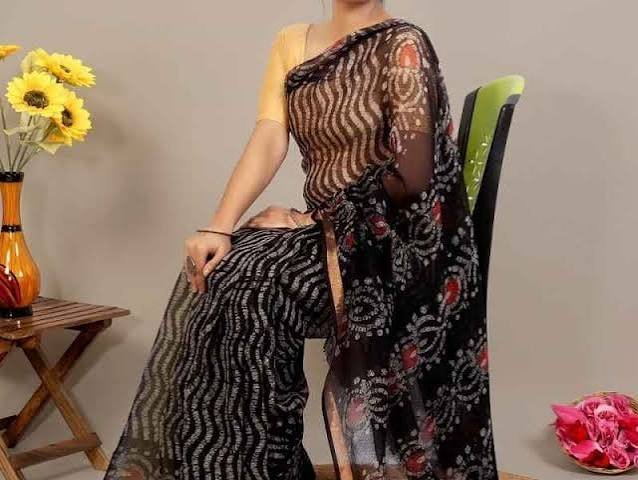
What Is Chanderi? Lightweight Elegance from Madhya Pradesh
Chanderi comes from the historic town of Chanderi in Madhya Pradesh and occupies a rather interesting position in the Indian wardrobe.
It looks luxurious without necessarily feeling heavy.
Traditional Chanderi is known for its fine texture, translucent appearance and subtle shine. Chanderi textiles are available in different constructions, including cotton, silk-cotton and silk varieties. Madhya Pradesh Tourism similarly describes Chanderi as a lightweight, sheer textile produced in pure silk, silk-cotton and Chanderi cotton forms. (Madhya Pradesh Tourism)
That variety matters when comparing Kota Doria vs Chanderi.
A cotton-heavy Chanderi may feel quite comfortable for summer daytime wear, while a richer silk Chanderi with zari naturally moves towards festive dressing.
Traditional motifs can include flowers, peacocks, geometric forms and coin-inspired motifs, while zari borders and woven butis give many Chanderi sarees their recognisable dressy finish. (Hepc India)
Think of Chanderi as the fabric you reach for when the invitation says traditional, but the temperature says please do not wear anything heavy.
Kota Doria vs Chanderi Weave: Why They Look So Different
The easiest way to distinguish these lightweight Indian fabrics for summer is to look closely at their surfaces.
Kota Doria has a visible grid.
The little square khats interrupt the surface and give the fabric its slightly textured, open and airy personality. The checks may look extremely subtle from a distance, but they become much clearer when you examine the textile closely.
Chanderi does not have that same signature checked construction.
Instead, its beauty comes from fineness, translucency, smoothness and lustre. Depending on the yarn composition, it may have a soft cotton character or a more luminous silk appearance.
So visually, the Kota Doria vs Chanderi difference is quite straightforward:
Kota Doria looks airy and textured. Chanderi looks smooth and luminous.
This difference also affects styling.
Kota works beautifully with simple borders, delicate prints, block prints, subtle zari and understated blouses.
Chanderi handles woven motifs, zari borders and dressier blouse combinations particularly well.
Breathability and Transparency: Which Is Cooler?
If your main question is simply, “Which one will feel cooler in a brutal Indian summer?”, Kota Doria usually gets the advantage.
The characteristic construction of Kota Doria produces a very light textile with excellent airflow. Government sources describing the textile similarly highlight its lightness, breathability and distinctive check structure. (Press Information Bureau)
That makes Kota Doria especially useful in cities where summer heat is the main enemy.
Think Delhi in May.
Jaipur in June.
Ahmedabad on a scorching afternoon.
Or simply any outdoor summer function where you know you will eventually regret every unnecessary layer of clothing.
Chanderi is also lightweight and comfortable in warm weather, but it tends to have a slightly more substantial visual and tactile presence.
There is another practical issue: transparency.
Kota Doria is often quite sheer. Chanderi can also be transparent or semi-transparent, but the degree depends heavily on the yarn, weave and specific garment.
For sarees, this is usually easy to manage with an appropriate petticoat and blouse.
For kurtas, you may need a lining, slip or inner layer.
So in the Kota Doria vs Chanderi breathability round:
Kota Doria wins for maximum airflow. Chanderi wins when you want breathability with a little more visual richness.
Which Fabric Drapes Better?
This one depends entirely on what you mean by “better”.
Kota Doria has a wonderful light, almost floating drape.
The pallu moves easily, the saree does not feel unnecessarily heavy around the waist and the overall effect can be beautifully relaxed.
That makes Kota excellent for daytime summer sarees.
But because it is so light, very soft Kota Doria may not give you the sharply sculpted fall of a heavier fabric.
Chanderi has more visual body.
It remains lightweight, but the silk content found in many varieties adds smoothness, lustre and a more polished fall.
If you want a saree that looks elegant in photographs, sits beautifully at an office function and can transition into dinner afterwards, Chanderi often has the advantage.
The Kota Doria vs Chanderi drape verdict is therefore:
Kota Doria for an airy, effortless drape. Chanderi for a graceful, more polished drape.
Chanderi vs Kota Saree: Which Saree Should You Buy?
For sarees, the decision becomes much easier once you think about where you will actually wear it.
Choose a Kota Doria saree for summer lunches, daytime pujas, casual office wear, travel, afternoon functions, small family gatherings and occasions where you will be outdoors for long periods.
A pastel Kota saree with a contrast blouse, silver jewellery and comfortable sandals can look effortlessly elegant without feeling overdressed.
Choose a Chanderi saree for office celebrations, conferences, pujas, festive dinners, engagement functions, wedding-related events, formal lunches and occasions where you want a slightly richer appearance without switching to heavy silk.
A Chanderi with delicate zari can give you that “occasion saree” effect while remaining significantly easier to carry than many traditional heavy silks.
In the Chanderi vs Kota saree comparison, Kota is the cooler casual choice while Chanderi is the stronger occasion choice.
Kota Doria or Chanderi for Kurtas and Suit Sets?
The comparison changes slightly when you move away from sarees.
A Kota Doria kurta or kurta layer can feel exceptionally light, but transparency becomes important. Many Kota garments require lining or thoughtful layering.
This can slightly defeat the purpose if a thick polyester lining is used underneath.
If you are buying Kota Doria specifically for summer, check the lining before purchasing. A breathable cotton lining is far more sensible than a heavy synthetic one.
Chanderi kurtas and suit sets tend to look naturally polished.
They work beautifully for festive office days, Raksha Bandhan, Eid gatherings, Diwali lunches, small wedding functions and evening pujas.
Again, lining matters because Chanderi itself can be translucent.
When choosing Kota Doria or Chanderi for stitched clothing, do not judge only the outer fabric. The comfort of the finished garment depends heavily on the lining.
Which Is Better for Summer Dupattas?
Honestly, both are excellent.
Kota Doria makes a particularly useful summer dupatta because it adds colour and texture without adding much weight.
You can pair a Kota dupatta with plain cotton kurtas, white chikankari, linen suits or simple office wear.
Chanderi dupattas feel a little richer.
A Chanderi dupatta with zari, woven motifs or an elegant border can instantly make a plain kurta set look festive.
If you already own several solid kurtas, this is worth remembering.
You do not always need another complete festive outfit. Sometimes a beautiful Chanderi dupatta does the job.
So for Kota Doria vs Chanderi dupattas, choose Kota for everyday summer layering and Chanderi when you want the dupatta to become the statement piece.
Office Wear vs Festive Wear: The Easy Verdict
This is probably the most useful shopping distinction.
For ordinary summer office days, Kota Doria works beautifully.
It is especially good if your commute involves walking, public transport or considerable time outdoors.
For an important meeting, presentation, office ethnic day or formal lunch, Chanderi may look more put together.
The sheen gives it a slightly more expensive visual finish.
The same logic applies to celebrations.
For a relaxed daytime puja, Kota Doria is wonderful.
For Diwali at the office, Raksha Bandhan lunch, a wedding welcome dinner or an engagement function, Chanderi usually has more festive presence.
In other words:
Kota is summer-first. Chanderi is occasion-first without forgetting summer comfort.
That is perhaps the simplest way to understand Kota Doria vs Chanderi.
Maintenance: Which Fabric Is Easier to Care For?
Neither textile should be treated like an ordinary machine-wash T-shirt.
Fine Kota Doria needs careful handling because its lightweight structure can snag or distort if handled roughly.
Chanderi also deserves gentle care, particularly when the fabric contains silk, zari or delicate handwoven motifs.
For expensive handloom pieces, always follow the seller or weaver’s care instructions rather than assuming that every Kota or Chanderi garment can be washed the same way.
Avoid aggressive wringing.
Store sarees clean and completely dry.
Keep sharp jewellery, rough handbags and exposed hooks away from very delicate fabric.
And if your saree contains significant zari or silk, professional dry cleaning may be preferable when recommended by the maker.
In the Kota Doria vs Chanderi maintenance comparison, there is no dramatic winner. Both are lightweight heritage textiles and benefit from gentle treatment.
Price and Durability: Which Gives Better Value?
This is where shoppers need to be careful.
There is no sensible universal price for either fabric.
A simple Kota Doria saree and an elaborate handwoven Kota saree with zari are completely different products. The same applies to cotton Chanderi versus premium silk Chanderi with intricate motifs and zari.
Instead of comparing only the price tag, ask what you are actually buying.
Check the fibre composition.
Check whether the item is handloom or powerloom.
Look at the intricacy of the weaving.
Ask about zari.
Examine the finishing.
And if authenticity matters to you, ask the seller clearly about the textile’s weaving origin.
Both Kota Doria and Chanderi have GI recognition, so geographical identity is not simply a decorative marketing story attached to these textiles. (Intellectual Property India)
For durability, neither should be purchased as a “rough-use” fabric.
These textiles are prized precisely because they achieve elegance with extraordinary fineness and lightness.
Treat them accordingly and they can remain valuable parts of your wardrobe for years.
How to Recognise Authentic Kota Doria
Start with the khat.
Authentic Kota Doria is associated with the characteristic small square checks created within the weave itself. Rajasthan’s craft documentation identifies this checked structure as a defining feature of the textile. (Handmade in Rajasthan)
Do not confuse a printed check with a woven khat.
Hold the fabric up to light and look at the weave.
You should see the grid as part of the fabric construction rather than something applied only to the surface.
The textile should also feel remarkably lightweight.
Most importantly, if a seller is charging a premium for “authentic handloom Kota Doria”, ask questions about where it was woven and who produced it.
A good seller should not become uncomfortable the moment you ask for details.
How to Recognise Authentic Chanderi Fabric
Chanderi requires a slightly different eye.
Look for fineness, translucency and characteristic lustre rather than Kota-style checks.
Remember that Chanderi is not a single fixed fibre composition. Traditional production includes cotton, silk-cotton and pure-silk forms, so two genuine Chanderi sarees may feel noticeably different. (Hepc India)
That is why “it contains silk” is not enough to establish quality or authenticity.
Look at the weaving.
Inspect the motifs.
Examine the border and pallu.
Ask whether the piece is handloom.
And ask where it was woven.
If you are paying handloom prices, you are absolutely allowed to ask handloom questions.
Kota Doria vs Chanderi: Best Fabric by Use Case
| Your Requirement | Better Choice |
|---|---|
| Peak May-June heat | Kota Doria |
| Maximum airflow | Kota Doria |
| Lightweight everyday saree | Kota Doria |
| Summer office wear | Kota Doria for daily wear; Chanderi for formal days |
| Office ethnic day | Chanderi |
| Summer wedding function | Chanderi |
| Daytime puja | Kota Doria |
| Festive puja or family function | Chanderi |
| Statement dupatta | Chanderi |
| Everyday lightweight dupatta | Kota Doria |
| Understated handloom look | Kota Doria |
| Richer, polished appearance | Chanderi |
| Very hot outdoor event | Kota Doria |
| Air-conditioned indoor function | Chanderi |
Final Verdict: Kota Doria or Chanderi for Indian Summers?
There is no universal winner in the Kota Doria vs Chanderi comparison because the two fabrics solve slightly different wardrobe problems.
Choose Kota Doria when the weather is your biggest concern.
It is one of those wonderful Indian textiles that can look elegant without making you feel as though your outfit is slowly cooking you alive.
Its light weight, characteristic open-looking checks and airy feel make it especially attractive for peak summer sarees, kurtas and dupattas.
Choose Chanderi when you want summer comfort but need to look a little more dressed up.
Its sheer texture, subtle shine and silk-cotton possibilities give it an elegance that moves effortlessly between office wear, festive dressing and semi-formal occasions. Chanderi’s lightweight and sheer character is also well documented in Madhya Pradesh’s textile and tourism material. (Madhya Pradesh Tourism)
If you are building a practical Indian summer wardrobe, there is actually a good case for owning both.
Keep Kota Doria for the afternoons when the temperature decides to behave like a tandoor.
Keep Chanderi for the summer invitations where “but it’s too hot” is unfortunately not an acceptable dress code.
That is the real Kota Doria vs Chanderi verdict:
Kota Doria wins for pure summer comfort. Chanderi wins for lightweight summer elegance.
Frequently Asked Questions About Kota Doria vs Chanderi
1. Which is better for summer, Kota Doria or Chanderi?
Kota Doria is generally the better choice for extreme summer heat because it feels exceptionally light and airy. Chanderi is also summer-friendly but has a richer, more polished appearance, making it better suited to formal and festive summer occasions.
2. Which is more expensive, Kota Doria or Chanderi?
Prices vary enormously according to whether the fabric is handloom or powerloom, the fibre composition, weaving complexity, zari and craftsmanship. Premium handloom versions of both textiles can be expensive, so compare the actual construction rather than assuming that one fabric is always cheaper.
3. Is Kota Doria transparent?
Yes, fine Kota Doria can be quite sheer. That light transparency is part of its airy character. Sarees should be paired with an appropriate petticoat, while Kota kurtas may require breathable lining or an inner slip.
4. Is Chanderi good for hot weather?
Yes. Chanderi is one of the better lightweight Indian fabrics for summer, particularly when you want something dressier than everyday cotton. Its fine, sheer character helps it remain visually rich without the heaviness of many festive silk textiles. (Madhya Pradesh Tourism)
5. Which is better for office wear: Kota Doria vs Chanderi?
For regular hot-weather office wear, Kota Doria is excellent because it is airy and lightweight. For presentations, conferences, festive office days or formal meetings, Chanderi usually looks more polished.
6. Which is better for a summer wedding?
Chanderi generally wins for summer weddings because it combines low weight with a more festive sheen. Kota Doria is excellent for relaxed daytime wedding functions, especially when the event is outdoors.
7. What is the difference between a Chanderi vs Kota saree?
A Kota Doria saree is recognised particularly for its lightweight checked khat weave, while Chanderi is known for a fine, translucent surface and subtle lustre. Kota usually looks breezier and more understated; Chanderi looks smoother and dressier. (Handmade in Rajasthan)
8. Which fabric drapes better?
Kota Doria gives a very light, floating drape, while Chanderi tends to create a smoother and slightly more polished fall. Choose Kota for effortless summer dressing and Chanderi when appearance and occasion dressing matter more.
9. Can Kota Doria be worn for festivals?
Absolutely. Choose a Kota Doria saree or suit with zari, woven motifs, a beautiful border or a dressier blouse. It works particularly well for daytime pujas and summer celebrations where heavier silk would feel uncomfortable.
10. Is Chanderi always silk?
No. Chanderi textiles can be produced in different fibre combinations, including cotton, silk-cotton and silk varieties. This is why you should always check the fibre composition rather than assuming every product labelled “Chanderi” is the same. (Hepc India)
11. Which is easier to maintain, Kota Doria or Chanderi?
Both require gentle care. Kota’s light weave can be delicate, while Chanderi containing silk or zari also needs careful handling. Always follow the care instructions supplied with a quality handloom garment.
12. Should I buy Kota Doria or Chanderi?
Buy Kota Doria if your priority is maximum comfort in hot weather. Buy Chanderi if you want a lightweight textile that can also handle office functions, festivals, pujas and semi-formal occasions. If your wardrobe allows it, the two fabrics complement each other extremely well.
See Also
Chanderi vs Kota Doria – Which Lightweight Saree is Right for You
Pre-Summwe Special! The Softest Mul Kota & Chanderi Kurtis You Need Right Now
Beat the Heat: The Ultimate Guide to Lightweight Indian Textiles for Scorching Summers
Linen Saree vs Cotton Saree: Which Is Better for Indian Summers?