Whether it is Diwali, Eid, Raksha Bandhan, or an upcoming family wedding, dressing your young boy in traditional Indian ethnic wear is always special. However, ordering ethnic wear online often comes with one common headache: getting the fit right.
Unlike modern Western wear like T-shirts and jeans, which use stretchy fabrics and standard international sizing, Indian ethnic garments rely on structured tailoring and proper drape. Relying solely on age labels (like “Age 4–5 Years”) often leads to tight armholes, tripping-long pajamas, or kurtas that look like oversized nightgowns!
In this comprehensive boys kurta pajama size guide, we will walk you through exact body measuring steps, growth allowances, age-specific fitting tips, and a detailed kids kurta size chart India to ensure your child looks dapper and stays comfortable all day long.
1. Quick Measurement Checklist
Before you grab a measuring tape, keep these quick tips in mind to get the most accurate numbers:
- Use a soft, flexible cloth measuring tape (avoid metallic hardware tape measures).
- Measure over light clothing or fitted innerwear so extra fabric doesn’t add fake bulk.
- Keep the tape snug, but not tight. You should be able to slide two fingers flat under the tape.
- Write down all numbers in inches. Most Indian ethnicwear tailors and online brands list size charts in inches.
- Have your child stand straight, feet flat, and arms relaxed at their sides.
2. Measurements Required for a Boys’ Kurta Pajama
To get a perfect bespoke fit when shopping for a boys ethnic wear fitting, you will need six core body measurements:
- Chest Circumference: The primary measurement used to determine kurta size.
- Shoulder Width: From shoulder tip to shoulder tip across the back.
- Kurta Length: From the top point of the shoulder down to the knee or mid-calf.
- Sleeve Length: From the outer shoulder edge down to the wrist bone.
- Waist Circumference: Around the natural waistline where the pajama will rest.
- Pajama Length: From the waist down to the ankle bone.
3. How to Measure Chest for a Kids Kurta
The chest measurement is the most critical metric in any kids kurta size chart India. It determines the size number listed by most brands (for instance, a Size 24 usually corresponds to a 24-inch garment chest).
Steps to Measure Chest:
- Ask your child to raise his arms slightly.
- Wrap the tape measure under his arms, around the fullest part of the chest and across the shoulder blades in the back.
- Ensure the tape is horizontal to the floor.
- Tell him to breathe naturally—do not let him inhale deeply or pull his stomach in.
- Record the actual body chest measurement.
Pro Tip: Never buy a kurta with a garment chest measurement identical to the actual body measurement. Kurtas need a 2 to 3-inch body ease/allowance so the child can sit, jump, play, and eat comfortably!
4. Shoulder and Sleeve Measurements for Boys Ethnic Wear
A shoulder seam that hangs too low makes a kurta look ill-fitted, while a narrow shoulder restricts arm movement and tears at the seams during play.
How to Measure Shoulder Width:
- Turn your child around so his back is facing you.
- Locate the prominent outer bony points at the tip of each shoulder joint.
- Measure across the natural curve of the upper back from shoulder point to shoulder point.
How to Measure Sleeve Length:
- Keep the measuring tape at the same outer shoulder bone point.
- Run the tape down along the outer arm to the wrist bone.
- If you want full sleeves that fold slightly at the cuff (churidar style), add an extra 0.5 to 1 inch to the sleeve measurement.
5. Determining the Correct Kurta Length
The ideal length of a kurta depends on the specific style you are choosing:
- Classic Straight Knee-Length Kurta: Measure from the high point of the shoulder (where the neck meets the shoulder) straight down to the middle of the kneecap.
- Short Kurta (Hip Length): Measure from the shoulder point down to the top of the hip bone or upper thigh.
- Anarkali / Angrakha Styles: Measure down past the knee to the mid-calf.
For children, a knee-length kurta is recommended as it provides an elegant traditional proportion without tripping the child during running or climbing stairs.
6. Pajama Waist and Length Measurements
Finding the right bottoms for a boys kurta pajama set depends on whether the garment features a traditional Pyjama, a Churidar, or a Dhoti.
How to Measure Pajama Waist:
- Wrap the tape around your child’s waist where he normally wears his pants.
- Most readymade kids’ pajamas come with elastic waistbands or drawstrings (nada). Keep in mind that elastic waistbands stretch comfortably up to 3–4 extra inches.
How to Measure Pajama Length:
- Straight Pyjama / Salwar: Measure from the waistline down along the side of the leg straight to the ankle bone.
- Churidar: Measure from the waist down to the ankle, then add 3 to 5 extra inches to create the traditional gathered pleats (churis) at the bottom of the shin.
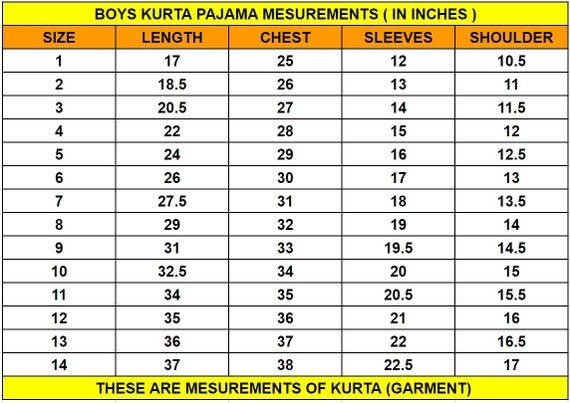
7. Kids Kurta Size Chart India (Age vs. Measurement Guide)
While measuring your child directly is always best, this general kids kurta size chart India serves as a helpful reference point when shopping online for readymade Indian ethnic wear.
| Age Group | Size Tag | Body Chest (Inches) | Garment Chest (Inches) | Kurta Length (Inches) | Pajama Waist (Inches) | Pajama Length (Inches) |
| 0 – 1 Year | 16 – 18 | 16″ – 18″ | 20″ – 21″ | 14″ – 16″ | 14″ – 18″ (Elastic) | 14″ – 16″ |
| 1 – 2 Years | 20 | 19″ – 20″ | 22″ – 23″ | 18″ – 20″ | 16″ – 20″ (Elastic) | 18″ – 20″ |
| 2 – 3 Years | 22 | 21″ – 22″ | 24″ – 25″ | 21″ – 22″ | 18″ – 22″ (Elastic) | 21″ – 22″ |
| 3 – 5 Years | 24 | 23″ – 24″ | 26″ – 27″ | 23″ – 24″ | 20″ – 24″ (Elastic) | 23″ – 25″ |
| 5 – 7 Years | 26 – 28 | 25″ – 26″ | 28″ – 30″ | 25″ – 27″ | 22″ – 26″ (Elastic) | 26″ – 28″ |
| 7 – 9 Years | 30 | 27″ – 28″ | 31″ – 32″ | 28″ – 30″ | 24″ – 28″ (Elastic) | 29″ – 31″ |
| 9 – 11 Years | 32 – 34 | 29″ – 31″ | 33″ – 35″ | 31″ – 33″ | 26″ – 30″ (Elastic) | 32″ – 35″ |
| 11 – 13 Years | 36 | 32″ – 34″ | 36″ – 38″ | 34″ – 36″ | 28″ – 32″ (Elastic) | 36″ – 38″ |
Note: Sizing across Indian brands varies slightly. Always compare actual garment dimensions provided in product listing descriptions against your child’s body measurements.
8. Smart Allowance for Growth: How Much Extra Space to Add?
Kids grow fast! It is tempting to buy two sizes up so the outfit lasts until the next festive season, but ethnic wear that is too large looks sloppy.
Recommended Growth Allowances:
- Chest Ease: Choose a garment chest size that is 2 to 3 inches wider than your child’s actual chest measurement.
- Length Allowance: Adding 1 to 1.5 inches in length allows for growth spurts without causing tripping hazards.
- Bottom Hem Margin: Look for outfits with a folded bottom hem margin inside that can be unstitched later to extend the pajama length.
9. Ethnic Wear Fitting Tips for Babies and Toddlers (0–3 Years)
When dressing infants and toddlers in ethnic wear, comfort is more important than aesthetics:
- Opt for soft linings: Choose kurtas lined with 100% pure cotton so raw silk or zari embroidery does not scratch delicate skin.
- Elasticated waistbands: Avoid drawstrings (nadas) for toddlers; elastic waistbands make quick diaper changes much easier.
- Wide necklines and shoulder snaps: Choose kurtas with side shoulder buttons or front plackets that open wide so the collar pulls easily over the baby’s head.
10. Perfect Fit for Active Children Aged 5–10 Years
Boys aged 5 to 10 rarely sit still during festivities, so their ethnic wear must allow full freedom of movement:
- Armhole Depth: Ensure the armholes have sufficient depth so the arms can raise freely without pulling up the entire torso of the kurta.
- Side Slits (Chaks): Check that the side slits start right at the hip line. Slits pinned too low restrict walking and sitting on floor cushions during poojas.
- Breathable Fabric Blend: Blends like cotton-silk or soft dupion give a shiny, festive appearance while remaining breathable and durable against tears.
11. Tailoring and Sizing Guidance for Pre-Teens (11+ Years)
Pre-teens undergo rapid physical growth, and their body structures transition from child-like torsos to broader shoulders:
- Shift to Tailored Silhouettes: Look for structured collars (Mandarin / Nehru collars) that sit flat against the neck without drooping.
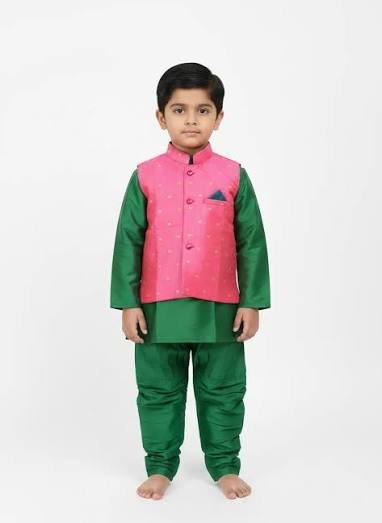
- Jacket/Nehru Vest Layering: A popular trend for pre-teens is pairing a short or long kurta with a floral or textured Nehru jacket. When buying sets, ensure the jacket chest is at least 1 inch larger than the kurta chest size so it sits neatly without bunching.
12. Sizing Considerations: Wedding Outfits vs. Everyday Kurtas
The style and occasion of the ethnic outfit influence how you should size the garment:
- Casual Cotton Daily Wear: Fits can be relaxed and roomier. Soft cotton kurtas shrink slightly after the first wash, so choosing half an inch larger in chest and length is recommended.
- Heavy Wedding Wear / Sherwanis: Heavy silk, brocade, or embroidered outfits do not stretch or shrink. They require precise tailoring across the shoulders and chest to maintain a clean, regal structure.
13. Online Shopping and Quick Alteration Hacks
When shopping for kids’ ethnic wear on online portals:
- Check Garment Size vs Body Size: Always read product details to confirm whether the size chart displays garment dimensions or recommended body dimensions.
- Use Temporary Safety Stitches: If a brand-new pajama is slightly long, turn it inside out and create a temporary running hand-stitch (kaccha taka) at the hem line. You can easily undo it when your child grows taller.
- Adjusting Elastic Waistbands: If the waist is loose, tie a small fold in the back elastic with a soft safety pin or tack it down with a needle and thread.
14. Frequently Asked Questions (FAQs)
Q1. How do I know what size kurta my 5-year-old needs?
Most 5-year-old boys take a Garment Chest size of 26 to 28 inches (Size Tag 24 or 26). However, always measure your child’s actual chest and add 2 to 3 inches for ease before placing an order.
Q2. Is Garment Chest size the same as Body Chest size in Indian ethnic wear?
No. Garment chest size includes built-in ease (loosing) so the wearer can move comfortably. If your child’s body chest is 22 inches, his garment chest size should be 24 or 25 inches.
Q3. Should I buy one size larger for kids ethnic wear?
Buying one size larger (adding about 2 inches in chest and 1 inch in length) is fine to accommodate future growth. Avoid buying two sizes larger, as droopy shoulders and long sleeves can spoil the overall look.
Q4. How do I measure my boy for a Churidar bottom?
Measure from his natural waist down to his ankle bone, then add 3 to 5 inches extra to allow for the traditional folds (churis) at the ankle.
Downloads & Printable Checklist
Before heading out to shop or browsing online stores, feel free to bookmark this page or download our quick Printable Boys Ethnic Measurement Checklist:
- Chest: _____ inches
- Shoulders: _____ inches
- Kurta Length: _____ inches
- Sleeve Length: _____ inches
- Waist: _____ inches
- Pajama Length: _____ inches
With these precise measurements in hand, you can confidently shop for kids’ kurtas online without worrying about returns, exchanges, or last-minute tailor visits!