
Hello again, textile lovers! If you have ever attended a traditional South Indian wedding, you know there is one specific moment when the entire room holds its breath. It isn’t when the music swells, or when the feast is served. It is the exact moment the bride steps into the mandap, draped in a heavy, luminous drape that catches the morning sun like liquid gold.
We are talking, of course, about pure Kanjivaram silk sarees.
Often hailed as the “Royal Silk of India,” a genuine Kanjivaram (or Kanchipuram) saree is much more than six yards of fabric. It is a structural masterpiece, a family heirloom passed down through generations, and a canvas of deep spiritual devotion. Woven in the ancient temple town of Kanchipuram in Tamil Nadu, these sarees possess a distinct weight, a metallic lustre, and a crispness that no other silk in the world can replicate.
But what goes on behind those wooden pit looms? How do weavers achieve those impossibly sharp, vibrant color contrasts? And in 2026, how are modern designers redefining this ancient textile for younger generations?
Let’s step inside the rhythmic, clicking world of Kanchipuram’s master weavers to uncover the secrets, techniques, and styling evolutions of pure Kanjivaram silk sarees.
The Divine Origin: Spun from the Lotus of the Gods
To understand the reverence surrounding pure Kanjivaram silk sarees, we have to look at Hindu mythology. According to local folklore, the design community of Kanchipuram traces its lineage directly back to Sage Markanda, who was renowned as the master weaver to the gods themselves. Legend says he loved weaving tissue cloth from the delicate fibers of the lotus flower.
Historically, the craft flourished under the great Chola dynasty in the 10th century, where kings used the premium silk to decorate temple deities and clothe royal families. Later, during the 15th-century Vijayanagara Empire, master weavers migrated from Andhra Pradesh to Kanchipuram, bringing advanced silk-twisting techniques that laid the groundwork for the structural drape we worship today.
[Sage Markanda Legend] ➔ [Chola Dynasty Royal Temple Weaving] ➔ [Vijayanagara Silk Innovation]
Because of this deeply spiritual history, weaving pure Kanjivaram silk sarees was traditionally viewed as an act of prayer. Every border, pattern, and color palette was designed to evoke a sense of auspiciousness and divine protection for the wearer.
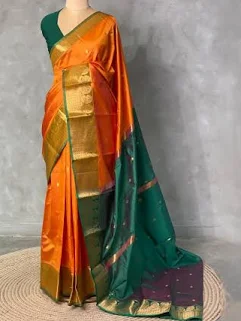
Anatomy of an Heirloom: Mulberry Silk Yarns and Pure Gold Zari
What gives a true Kanjivaram its signature heavy weight and metallic shimmer? It all comes down to the extreme structural purity of the raw materials used on the loom.
1. The Heavyweight Mulberry Silk Yarns
Unlike lightweight silks that feel flimsy, an authentic Kanjivaram is surprisingly dense. Weavers use high-grade, heavy-twist mulberry silk yarns sourced directly from the sericulture farms of Karnataka.
To create the fabric’s signature durability, three individual silk threads are twisted tightly together with a single silver thread before weaving (Mukkuri silk). This intensive triple-warp technique gives the saree its structural thickness, ensuring it holds its pleats perfectly and can last for over a century without tearing.
2. The Real Venpattu Zari
The shimmering borders of pure Kanjivaram silk sarees are legendary because they use real metallic elements. Traditional Venpattu zari is made using a brilliant three-layered engineering process:
[Pure Silk Core Thread] ➔ [Wrapped in 925 Sterling Silver Wire] ➔ [Dipped in 24-Karat Liquid Gold]
Because of this authentic silver and gold plating, a genuine Kanjivaram saree acts as a literal financial investment. When you hold a real one, the zari feels warm to the touch and reflects light with a soft, elegant glow, completely unlike the harsh, scratchy glare of modern plastic or copper imitations.
The Korvai Technique: The Secret to Those Jaw-Dropping Contrast Borders
Have you ever wondered how a Kanjivaram saree manages to have a brilliant, solid emerald green body paired with an incredibly sharp, ruby-red border without the colors bleeding into one another?
The secret lies in an extraordinarily labor-intensive weaving method called the Korvai technique.
In Tamil, Korvai literally means “to join.” Unlike standard sarees where the machine weaves the border and body together out of the same continuous thread, a Korvai saree is woven using three separate shuttles on a traditional pit loom.
- The Setup: It requires two highly synchronized master weavers sitting side-by-side. One artisan handles the warp and weft of the central saree body, while the second artisan simultaneously weaves the contrast borders.
- The Interlock: As the threads meet, the weavers manually interlock the body and border strands using a zig-zag joint technique known as Petni.
This manual interlocking process requires immense technical precision. If one weaver drops their tension even slightly, the entire fabric warp is ruined. Because of this complexity, a single Korvai technique saree can take a team of weavers anywhere from two weeks to a month to complete, making it the most highly prized variation of pure Kanjivaram silk sarees.
Reading the Borders: Decoding Temple Architecture Motifs and Symbols
The design language of Kanchipuram is a visual love letter to the sacred shrines of South India, such as the iconic Kamakshi Amman and Ekambareswarar temples. The borders and pallu (the decorative end-piece) of pure Kanjivaram silk sarees are never just random geometric shapes; they are filled with deep, protective symbolism.
The next time you examine a luxury bridal weave, look closely for these traditional motifs:
1. Thazhampoo Rekku (The Temple Gopuram Border)
This is the absolute hallmark of a classic South Indian weave. Thazhampoo Rekku refers to rows of sharp, towering triangles woven along the inner edge of the border. These triangles mimic the tiered, majestic entrance towers (Gopurams) of Dravidian temples, symbolizing spiritual grounding and higher elevation.
2. The Auspicious Animals
- The Mayil (Peacock): Representing royalty, divine beauty, and immortality. Peacock motifs are almost always woven into the golden pallu using pure zari threads.
- The Mankolam (Mango/Paisley): A universal symbol of fertility, abundance, and auspicious beginnings, making it a mandatory element on South Indian bridal wear.
- The Yali: A mythical creature featuring the head of a lion and the body of an elephant, woven into the borders to act as a symbolic guardian against negative energy.
The RankMath Authenticity Test: How to Spot a Genuine Kanjivaram
Because these sarees carry a premium price tag, the market is sadly flooded with synthetic polyester replicas and cheap powerloom imitations. If you want to make sure you are spending your money on authentic pure Kanjivaram silk sarees, perform these three foolproof checks before swiping your card:
1. The Rub Test for Zari
Find a small patch of the heavy gold zari work and rub it gently against a clean white cotton cloth. Genuine zari made with real silver and gold plating will never leave a dark metallic stain or rub off on the fabric. If it streaks or leaves a greyish residue, it is a cheap chemical or copper substitute.
2. The Burn Test for Pure Silk
If you can pull a single loose silk thread from the edge of the saree fringe, hold it carefully over a flame with tweezers.
- The Real Deal: Pure mulberry silk will burn slowly, smell exactly like burning human hair, and leave behind a crisp, powdery black ash that crumbles completely between your fingers.
- The Synthetic Fake: Polyester or nylon blends will melt rapidly, smell like burning plastic, and form a hard, unyielding plastic bead that cannot be crushed.
3. Look for the Silk Mark and GI Tag
Just like Champagne from France, authentic Kanchipuram silk is legally protected by the Government of India under the Geographical Indication (GI) Act. When shopping online or at heritage emporiums, always look for the official Silk Mark India hologram sticker and the woven GI Tag certification on the pallu corners.
Modern Styling Trends: Reimagining Kanjivaram in 2026
Think pure Kanjivaram silk sarees are only meant for traditional morning wedding rituals? Think again! In 2026, Gen-Z fashionistas and top luxury designers are flipping the script, proving that this ancient, structured textile looks phenomenal in contemporary, experimental wardrobes.
Here is how style icons are draping their silks today:
[Traditional Kanjivaram Saree] + [Tailored Corset / Velvet Crop Top] + [Minimalist Leather Waist Belt] = Modern Royal Elegance
- The Velvet & Corset Contrast: Ditch the matching silk elbow-length blouse. Instead, pair a heavy, jewel-toned Kanjivaram with a sleek, structural velvet corset or a minimalist high-neck collar blouse to create a gorgeous textural contrast.
- The Belted Silhouette: Because the triple-warp mulberry silk holds its shape so firmly, it is the perfect canvas for a belted drape. Cinch your pleats at the waist with a thin gold coin belt (Oddiyanam) or a contemporary leather belt to streamline your look for evening receptions.
- The Lehenga Drape: Want the drama of a skirt with the grace of a saree? Style your Kanjivaram using the pleated lehenga drape method, letting the grand, gold-laden pallu cascade loosely over your arm for maximum impact in event photography.
How to Wash, Pack, and Preserve Your Heritage Silk
Because pure Kanjivaram silk sarees contain real gold and silver wires, improper storage can cause the metal to oxidize, turning your pristine gold zari into a dull, tarnished black. Follow this preservation checklist to keep your investment pieces radiant for decades:
- Strictly Dry Clean Only: Never expose your heavy bridal silks to water or harsh home laundry detergents. Always send them to a dry cleaner who specializes in luxury handloom textiles.
- Wrap in Pure Cotton: Avoid plastic covers or cardboard boxes at all costs, as they trap moisture and harmful off-gases. Instead, wrap each saree individually in a clean, soft white muslin or cotton cloth.
- The Six-Month Airing Ritual: Take your sarees out of the wardrobe every six months. Hang them in a dark, well-ventilated room for a few hours to let the fabric breathe, then refold them differently to prevent the heavy silk threads from splitting along permanent crease lines.
Wrap Up: Weaving Love Across Generations
At its core, buying a pure Kanjivaram is an emotional experience. It is a textile that witnesses your most joyful milestones—your weddings, your festivals, your family milestones. When you wear one, you aren’t just styling an outfit; you are carrying the incredible livelihood, dedication, and heartbeat of South India’s master weavers on your shoulders.
Do you remember the very first time you wore a heavy silk saree? What is your all-time favorite color combination for a festive look? Let’s chat in the comments section below—I’d love to hear your textile stories!