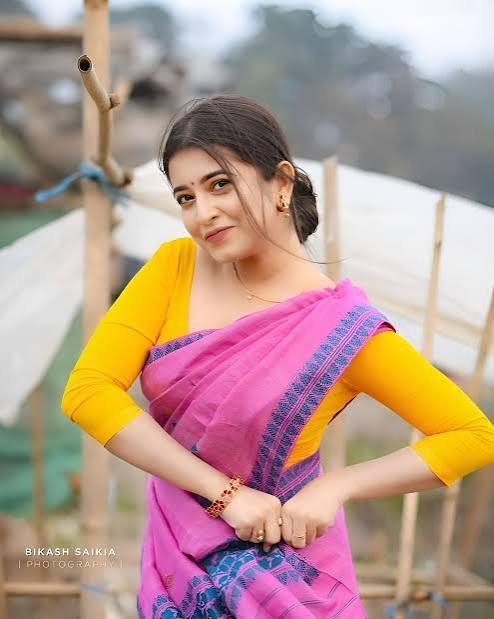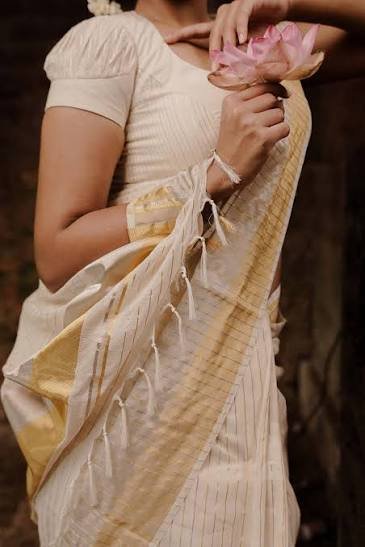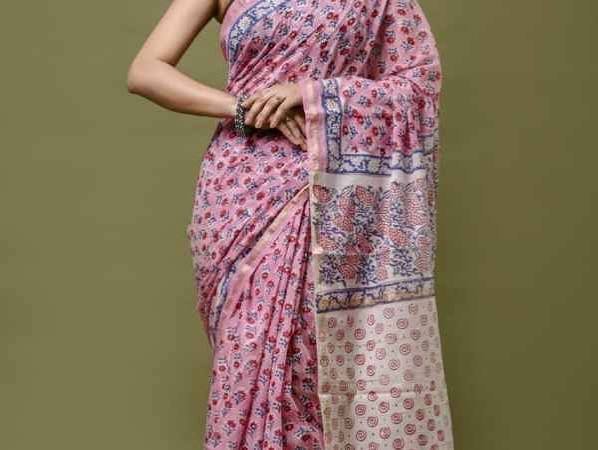

Tant is a lightweight, everyday Bengali cotton saree usually recognised by its crisp texture and decorative border. Jamdani is a finer, more labour-intensive figured weave in which motifs are inserted individually, making it more ornate and generally more expensive. While Tant sarees are crafted primarily for daily comfort and humid summers, Jamdani sarees serve as aristocratic, floating works of art perfect for festive occasions and celebrations.
If you have ever stepped into a traditional Bengali handloom store or browsed through authentic drape collections online, you know the instant magnetic pull of Bengal cottons. The breathtaking sheer elegance, the light rustle of crisp fabric, and the exquisite borders are simply irresistible. But for anyone exploring Bengali cotton saree types for the first time—or even seasoned drape lovers updating their festive wardrobe—one question comes up repeatedly: Which one should I buy—a Tant or a Jamdani?
When comparing a Tant vs Jamdani saree, you aren’t just looking at two different garments; you are looking at two distinct heritage craft movements from Eastern India. While both represent the absolute pinnacle of Bengal handloom weaving, their textures, weights, creation processes, price points, and ideal occasions are world’s apart. In this ultimate comparison guide, we break down every single detail of the difference between Tant and Jamdani sarees so you can pick the absolute best piece for your personal style and budget.
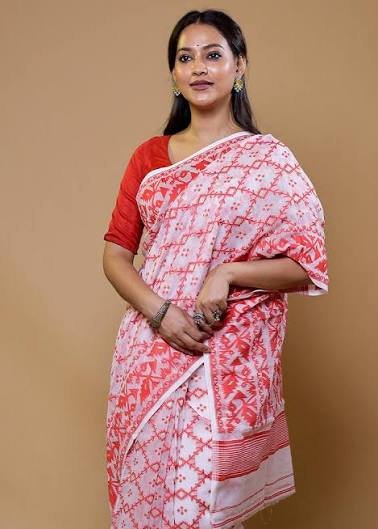
1. Tant vs Jamdani Comparison Table
To give you a quick bird’s-eye view of how these two iconic drapes stack up against each other, here is an executive summary table covering every key parameter:
| Feature / Parameter | Tant Saree | Jamdani Saree |
| Core Origin | West Bengal (Fulia, Shantipur, Dhaniakhali, Begumpur) | Undivided Bengal / Dhaka (Bangladesh), Kalna, Nadia |
| Weaving Technique | Powerloom or traditional shuttle loom with Jacquard/Dobby | Discontinuous supplementary weft hand-woven shuttle-less technique |
| Yarn & Count | 2/80s to 2/100s combed cotton yarn | Superfine cotton (up to 100s-200s count), Muslin, Silk-cotton blend |
| Weight & Feel | Slightly heavier, crisp, starched, structured drape | Featherlight, soft, floating sheer drape, zero stiffness |
| Motif Integration | Woven across the body or borders in standard repeated runs | Inlaid individually by hand using non-structural supplementary threads |
| Reverse Side Finish | Has floating cut threads on the back (if jacquard) | Identical finish on both front and back (Seamless floating effect) |
| Primary Occasion | Daily wear, office wear, hot summer afternoon outings, Pujas | Festivals (Durga Puja), weddings, grand receptions, regal evenings |
| Price Range (INR) | ₹800 – ₹3,500 (Highly affordable) | ₹2,500 – ₹45,000+ (Premium heirloom investment) |
| Maintenance | Requires regular liquid starching and crisp iron pressing | Dry clean preferred or delicate cold hand-wash without heavy starching |
2. What is a Tant Saree? The Everyday Marvel of Bengal
A Tant saree is the quintessential daily staple for millions of women across Bengal and neighboring eastern states. The word “Tant” literally translates to “handloom” in Bengali. Historically developed in key textile centers like Shantipur, Fulia, Dhaniakhali, and Begumpur, Tant sarees were engineered specifically to beat the tropical humidity and soaring heat of Bengal summers.
Crafted using tightly woven cotton yarn (typically 80s to 100s count), a traditional Tant saree is instantly identifiable by its distinctively thick, decorative border, heavily embellished pallu (or aanchal), and a crisp, starched texture. When you drape a classic Tant, it holds a proud, structured silhouette that stays perfectly in place all day long—making it an absolute favorite for working professionals, schoolteachers, and everyday home wear.
3. What is a Jamdani Saree? The Imperial Floating Artistry
If Tant is the breathable workhorse of Bengal textiles, Jamdani is its poetic, regal queen. Originating centuries ago in Dhaka (present-day Bangladesh) under royal Mughal patronage, Jamdani—often referred to as Dhakai Jamdani—is recognized by UNESCO as an Intangible Cultural Heritage of Humanity.
The term Jamdani derives from the Persian words “Jam” (flower) and “Dan” (vase). What makes a Jamdani saree legendary is its “figured weave” nature. It is crafted on fine muslin or sheer cotton fabric using a supplementary weft technique. Instead of printing or embroidering patterns onto a finished fabric, master artisans weave individual geometric and floral motifs manually into the warp while the fabric is being created on the loom. The result? Motifs that appear to float weightlessly on a sheer, cloudy background!
4. Difference in Weaving Technique: Hand-Loomed vs Supplementary Weft
When analyzing a Tant vs Jamdani saree, the fundamental distinction lies in the engineering behind the loom. Understanding this weaving mechanism explains why Jamdani requires months of painstaking labor while Tant can be produced more systematically.
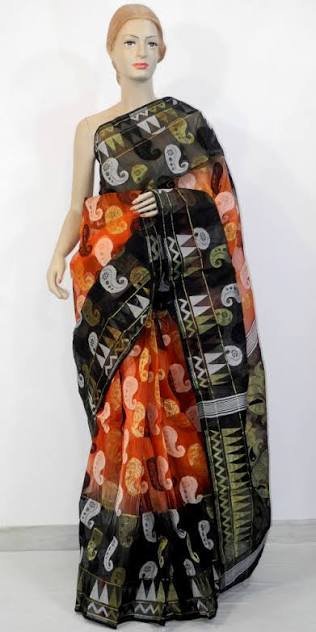
The Tant Weaving Mechanism
Tant sarees are woven on traditional pit looms or modern frame looms equipped with Jacquard or Dobby attachments. The warp (vertical threads) and weft (horizontal threads) form a stable, uniform plain weave base. The thick borders and decorative motifs on the body are created using pre-programmed punch cards or dobby mechanisms that lift specific warp threads together as the shuttle passes through. This allows for clean, crisp repeating geometric stripes, checks, and paisley motifs.
The Jamdani Weaving Process
In stark contrast, authentic Jamdani weaving uses no mechanical Jacquard attachments or punch cards. The weaver sits at a handloom with a drawn paper design pattern (called a Naksha) placed beneath the warp threads. As the shuttle carries the fine foundation thread across, the weaver manually picks up specific warp threads using bamboo or steel needles (called Kandul) and inserts a thicker spool of thread to create a single motif line. This process is repeated row by row, motif by motif.
Did You Know?
A master weaver and an apprentice working together on a genuine handwoven Dhakai Jamdani can take anywhere from 15 days to 9 months just to finish a single saree!
5. Motifs and Borders: Structural Patterns vs Floating Gems
Another visually thrilling aspect in the difference between Tant and Jamdani is how motifs and borders are styled:
- Tant Borders & Motifs: Tant sarees feature thick, bold borders—often 2 to 6 inches wide—woven with metallic zari or dark contrasting cotton threads. Popular border styles include Bhomra (bumblebee), Ansh (fish scale), and Taj (crown). The body of the saree usually features small repeated dots (buttis), stripes, or classic box checks.
- Jamdani Floating Artistry: Jamdani motifs are deeply symbolic, root-level artwork inspired by nature. Because threads are added by hand, motifs are intricate and detached. Signature motifs include:
- Panna Hazar (A thousand emeralds – dense floral spray)
- Tercha (Diagonally running floral bands)
- Jhalar (Cascading floral network along borders)
- Kalka (Classic paisley or mango teardrop)
Visual Motif Glossary
- Panna Hazar: Scattered floral spray across sheer muslin.
- Bhomra Border: Thick striped border classic to Tant.
- Tercha Pattern: Diagonal geometric weave found in premium Dhakai Jamdanis.
6. Weight, Transparency and Drape: How They Feel on You
Whether you choose a Jamdani or Tant saree often boils down to how you like your drape to feel on your body during long hours of wear:
Texture and Stiffness: Fresh Tant sarees come heavily starched out of the loom shop. They are slightly stiff, hold crisp pleats effortlessly, and maintain a firm, structured flare that gives a taller, regal posture. Tant is relatively opaque compared to fine muslin.
Featherlight Sheerness: Jamdani is celebrated for its ethereal, cloud-like lightness. Made with gossamer-thin cotton or silk-cotton threads, a Jamdani saree weighs almost nothing (often under 300-400 grams). It hugs the body gently, offers a soft semi-transparent sheer drape, and falls in soft, dreamy folds without requiring any heavy starching.
7. Everyday vs Festive Use: Matching the Saree to the Occasion
Understanding which saree suits which event is key to mastering the Bengali cotton saree types in your wardrobe collection.
When to Wear a Tant Saree:
- Daily Work & Office Wear: Keeps you cool, crisp, and professional through 10-hour workdays in humid summer climates.
- Morning Puja Offerings: A traditional white Tant saree with a bold red border (Lal Paar Saree) is the absolute icon for Anjali during Durga Puja morning rituals, Saraswati Puja, and Lakshmi Puja.
- Casual Family Gatherings: Easy to maintain and comfortable for hosting guests at home.
When to Choose a Jamdani Saree:
- Durga Puja Pandal Hopping (Evenings): A vivid, rich-toned Jamdani radiates effortless festive luxury under nighttime lights.
- Weddings & Reception Dinners: Soft silk-cotton Jamdanis or traditional handwoven Dhakai Jamdanis embellished with metallic zari make breathtaking ethnic statements.
- Formal Dinners & High Teas: Exotic, sheer Jamdanis convey refined artistic elegance that immediately commands respect.
8. Price Differences: Budget Comfort vs Investment Heritage
Because the weaving labor required for these two sarees differs exponentially, their pricing structures reflect distinct market tiers:
- Tant Price Spectrum: Tant sarees are incredibly budget-friendly! A beautiful, authentic daily-wear handloom Tant starts at just ₹800 to ₹1,200. Premium designer Tant sarees featuring heavy zardozi or jacquard pallus range between ₹1,800 and ₹3,500.
- Jamdani Price Spectrum: A true handwoven Jamdani is a fine luxury investment. While machine-made copies or semi-Jamdani poly-cotton blends start at around ₹1,500, an authentic handloom soft cotton Jamdani ranges from ₹3,500 to ₹8,500. Masterpiece Dhakai Jamdanis crafted in fine muslin with 100+ count threads can easily range from ₹12,000 to over ₹50,000!
9. How to Recognise Handwoven Examples & Avoid Fake Machine Copies
With market stalls and online sites flooded with powerloom knockoffs, knowing how to spot an authentic handwoven Tant vs Jamdani saree is critical for savvy buyers!
Authenticity Buyer Checklist
- Inspect the Reverse Side (The Ultimate Test): Turn the saree over! On a real handwoven Jamdani, the reverse side has no long floating threads or loose ends—the motifs feel completely smooth, seamlessly locked into the base fabric. Machine-made Jamdanis leave messy floating thread floats on the back.
- Examine Motif Imperfections: Handwoven Tant and Jamdani sarees feature subtle human irregularities in thread tension or motif spacing. Perfection is the mark of a machine!
- Check the Selvage (Edges): Genuine handlooms feature slightly uneven, textured edges along the length (selvage), unlike perfectly flat, pin-pricked powerloom edges.
- Feel the Weight Ratio: If a “Jamdani” feels stiff, heavy, or synthetic to touch, it is likely a polyester powerloom replica.
10. Care and Starch Requirements: Keeping Your Drapes Fresh
To preserve the vibrant colors and structural integrity of your Bengal handlooms, follow these simple maintenance principles:
Tant Care Strategy: Tant sarees thrive on starch! Wash them gently in cold water using a mild detergent. To retain their iconic crispness, dip them in liquid starch (rice water starch or commercial fabric starch) before drying them in shade. Iron them while slightly damp using a high-temperature cotton setting.
Jamdani Care Strategy:Never heavy-starch a fine Jamdani! Starch can stiffen delicate supplementary threads and cause them to snap over time. Dry cleaning is highly recommended for silk-cotton or fine muslin Jamdanis. For pure cotton Jamdanis, hand-wash gently in cold water with gentle liquid soap, wrap in a towel to press out excess water, and steam iron gently on low heat.
11. Which Should a First-Time Buyer Choose?
Still standing at the crossroad deciding between a Jamdani or Tant saree for your cart? Here is our quick decision matrix based on your goals:
- Buy a Tant Saree if: You want an affordable, durable, everyday summer saree; you love a structured, crisp drape that stays neatly pleated; or you need a classic red-and-white saree for festival morning rituals.
- Buy a Jamdani Saree if: You want a lightweight, breathtaking masterpiece for special occasions; you prefer soft, semi-sheer fabrics that hug the body; or you are building an heirloom handloom collection that highlights rich Indian textile heritage.
12. Frequently Asked Questions (FAQs)
Q1. Is Jamdani softer than Tant?
Yes, absolutely! Jamdani sarees are made from finer yarn with supplementary un-starched motifs, giving them a soft, featherlight, cloud-like feel. Tant sarees come stiffly starched to offer a crisp, structured silhouette.
Q2. Can I wear a Tant saree without starching it?
Yes, you can! If you wash out the initial loom starch with plain water, a Tant saree becomes soft and supple. However, most drape enthusiasts prefer mild starching to maintain its iconic neat pleats.
Q3. What is a Dhakai Jamdani?
Dhakai Jamdani refers specifically to the historic Jamdani weave originating from Dhaka, Bangladesh. It represents the finest, sheerest muslin weave with pure hand-inlaid motifs without any mechanical assistance.
Q4. Why are Jamdani sarees more expensive than Tant sarees?
Jamdani sarees require complex manual thread-by-thread insertion without mechanical Jacquards. A weaver can spend weeks or months hand-crafting a single piece, making the labor cost and artistic skill far higher than standard Tant weaving.
Q5. Do Tant sarees shrink after washing?
Because Tant sarees are made of 100% natural cotton yarn, slight shrinkage (approx. 2-3%) can occur during the first cold wash. Always dry in shade and iron well to restore length!
See Also
- Tant vs Jamdani – Compare Bengal’s everyday tant cotton saree with the UNESCO-listed jamdani muslin — weaving technique, pricing, occasion, and heritage value
- Tant & Jamdani Sarees Explained | Indian Handloom Heritage Documentary
- TANT Baluchari & Jamdani | West Bengal special | Pure cotton Sarees
- Kota Doria vs Chanderi: Which Fabric Is Better for Summer?
- Linen Saree vs Cotton Saree: Which Is Better for Indian Summers?