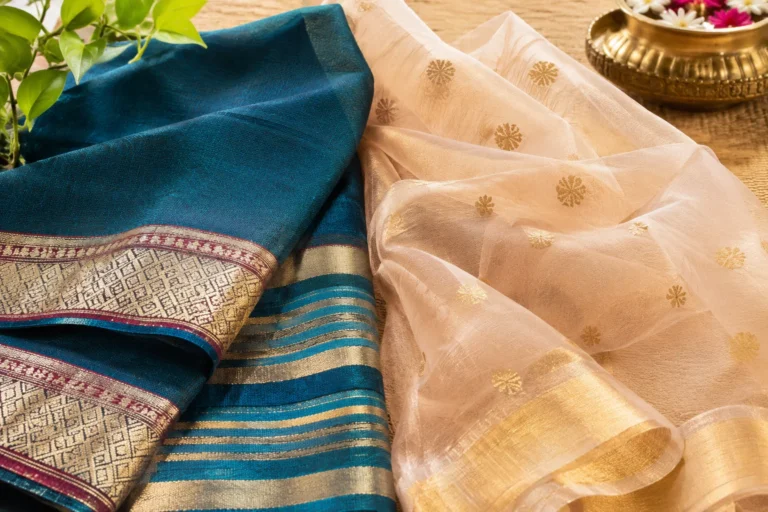
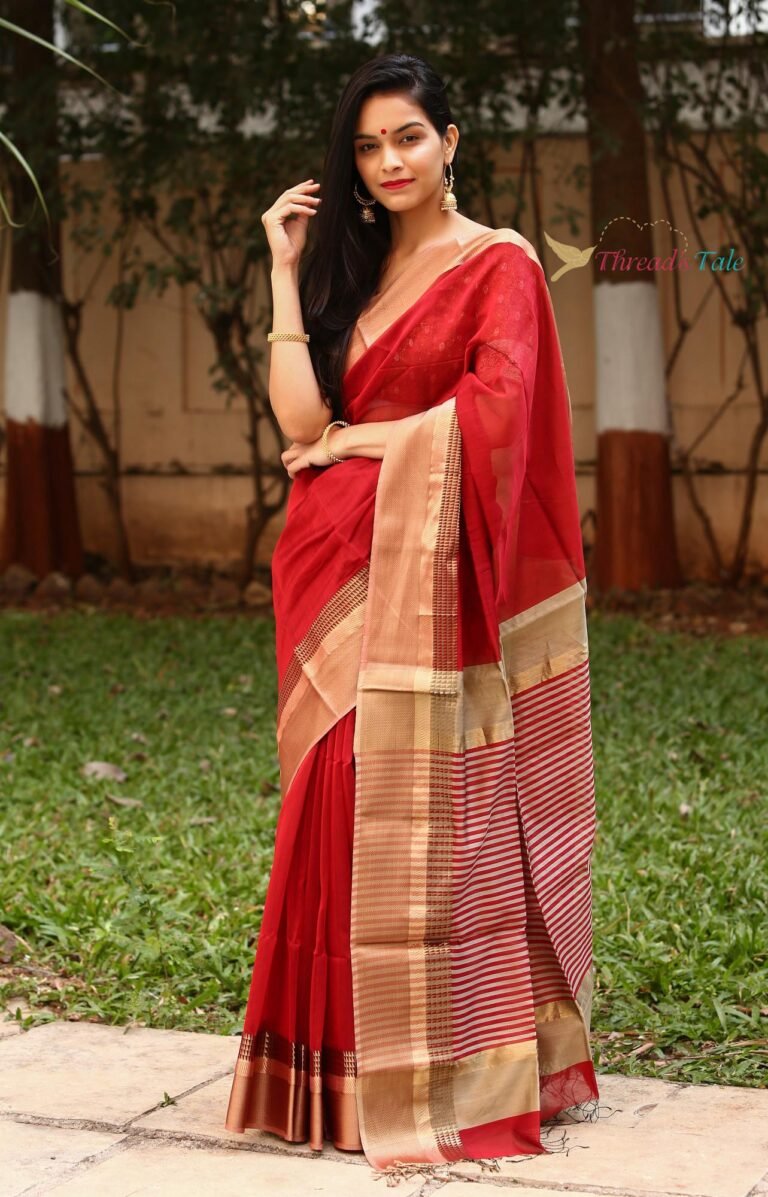
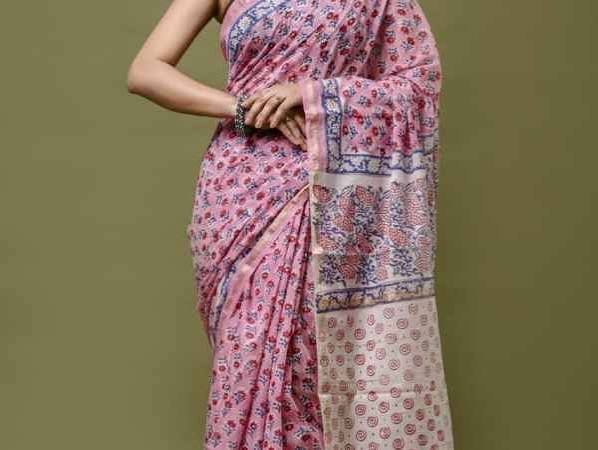
If you have ever browsed through an Indian festive collection or wandered down a heritage craft bazaar in Gujarat, you have probably spotted a textile that glows like pure silk on the outside yet feels surprisingly cool and breathable against your skin. That magical textile is Mashru fabric.
Mashru is a traditional woven textile historically associated with western India, particularly Gujarat and Kutch. Its traditional silk-and-cotton construction—featuring a lustrous silk warp face and a soft cotton weft backing—and characteristic glossy surface distinguish it from many contemporary fabrics sold under similar labels; compositions vary by product. (Mashru – Materials And Medium)
In short, Mashru fabric is the ultimate Indian textile compromise—and we mean that in the best possible way! It solves a problem every Indian shopper knows too well: wanting the royal, celebratory shine of pure silk without feeling hot, sweaty, or weighed down in our tropical climate. Let’s unpack the fascinating story, intricate craft, and modern uses of this heritage weave.
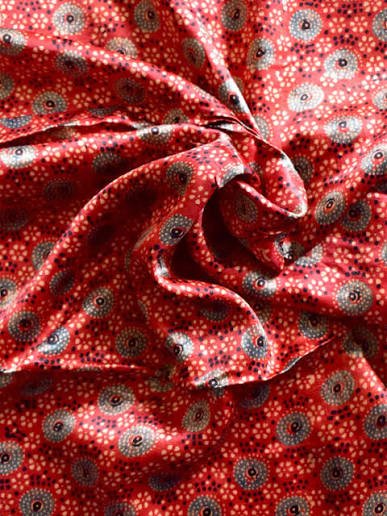
What Is Mashru Fabric Made Of?
To answer the question directly for anyone shopping online or at a local handloom store: Traditional Mashru fabric is a dual-layered, warp-faced satin weave made from pure silk on the outer face and spun cotton on the inner backing. Unlike standard blended yarns, the silk warp floats over multiple cotton weft threads, giving you silk’s rich sheen outside and cotton’s breathable comfort against the skin.
Because contemporary powerlooms and commercial retailers often use the term loosely, you might also encounter modern versions made from viscose rayon, modal, or art silk paired with cotton. Always check the label carefully before buying!
What Does the Word Mashru Mean?
Every Indian handloom has a story tucked into its name, and Mashru fabric carries two linguistic roots that explain why it was invented in the first place.
First, in Arabic, the word Mashru (derived from mashry) translates to “permitted” or “lawful.” Centuries ago, during the expansion of Islamic rule and trade across West Asia and the Indian subcontinent, certain religious interpretations prohibited Muslim men from wearing pure silk directly against their skin. Silk was associated with extravagance, and direct skin contact was frowned upon in daily dress. However, royal courtiers, nobles, and merchants still wanted garments with a regal, luminous presence.
Enter the genius of Indian weavers. By engineering a cloth where soft cotton touched the body while lustrous silk faced outward, they created a textile that was religiously “permitted” while looking every bit as grand as pure silk.
Second, textile historians also point to its Sanskrit linguistic cousin, Misru, which literally means “mixed.” Across historical archives—including the 16th-century Mughal administrative treatise Ain-i-Akbari compiled by Abu’l-Fazl—mixed silk-and-cotton textiles are documented as prized courtly fabrics. Whether you look at it through the lens of Mashru (permitted) or Misru (mixed), the name perfectly captures the cleverness of this dual-fiber weave.
How Is Traditional Mashru Fabric Made?
Creating authentic handwoven Mashru fabric is nothing short of textile engineering. Unlike modern “cotton-silk” fabrics where cotton and silk fibers are twisted together into a single blended yarn before weaving, traditional Mashru keeps the two fibers structurally separate through a warp-faced satin weave.
According to documentation by Kutch craft preservation organizations like Khamir and master weavers in Patan—such as veteran Khatri artisans who have practiced the craft across generations—the traditional loom process unfolds in meticulous stages:
1. Preparing the Silk Warp (Tano)
The process starts with preparing the warp—the vertical threads stretched lengthwise across the loom. Traditional warp makers (known locally as tanivala) prepare silk yarn lengths that often span around 60 to 63 yards. If the final textile is meant to have stripes or feathered ikat (khanjari) waves, the silk threads are dyed and arranged in exact color sequences before they even touch the loom.
2. Natural Sizing with Flour Paste
Pure silk threads are fine and delicate, so they need strengthening to withstand the tension of a handloom. Weavers brush a natural sizing paste—traditionally made from wheat flour or rice flour mixed with water—onto the stretched warp threads using small hand brushes (called puchado in Gujarat). Once dry, this paste keeps the silk filaments smooth, tangle-free, and ready for tight weaving.
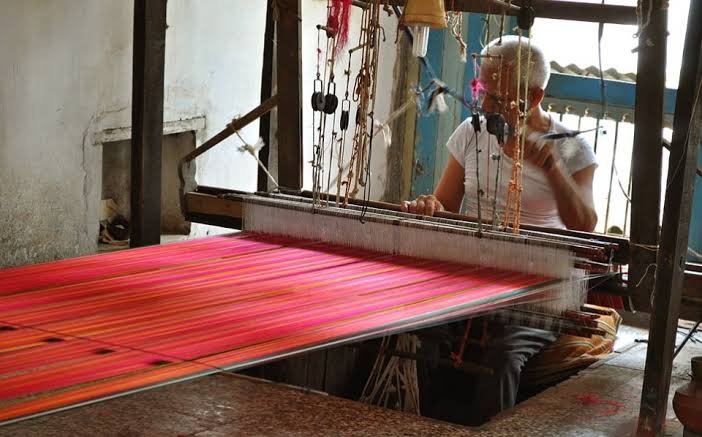
3. Weaving on the Traditional Pit Loom (Shaal)
Authentic Mashru fabric is woven on a traditional pit loom (shaal), where the weaver sits at ground level with foot pedals (treadles) recessed into a pit below. Here is where the magic happens:
- The warp (vertical) is 100% silk.
- The weft (horizontal shuttle thread) is 100% cotton.
- Using an 8-shaft satin setup, the weaver lifts seven silk warp threads up for every one thread pushed down, allowing each silk thread to float continuously over six or seven cotton weft picks before interlacing.
Because so many silk floats pack closely together on the top surface, the cotton weft is completely hidden from view on the right side, while the reverse side remains a matte, absorbent bed of pure cotton.
4. Washing, Beating, and Finishing
Once off the loom, raw Mashru is not immediately ready for tailoring. In traditional Patan and Mandvi workshops, the woven cloth is washed and then rhythmically beaten with smooth wooden clubs or bars while still damp. This age-old finishing step flattens the silk floats, closes tiny gaps between threads, and brings out that signature mirror-like sheen without needing any synthetic chemical gloss.
What Does Mashru Fabric Look and Feel Like?
If you hold a piece of genuine Mashru fabric in your hands for the first time, the contrast between its two sides will immediately catch your attention.
Visual Appearance and Classic Patterns
On the front, Mashru has a deep, liquid-like satin luster. Unlike heavy Banarasi brocades that glitter with metallic zari, Mashru’s glow comes purely from densely packed silk filaments catching the light. Historically, Kutchi and Gujarati weavers favored bold, joyful color palettes—fiery reds, turmeric yellows, indigo blacks, emerald greens, and magenta pinks.
Over the centuries, artisans developed distinct visual vocabularies for Mashru patterns:
- Classic Bold Stripes: Crisp vertical stripes of varying widths running edge-to-edge.
- Khajuria: A chevron or herringbone-style zig-zag pattern resembling date palm leaves.
- Kankani: Tiny, delicate pin-dots woven inside or alongside stripes, famously associated with Anjar in Kutch.
- Khanjari: Wavy, feathered lines created by tie-dyeing the silk warp threads (ikat) before weaving.
- Danedar: A textured variation featuring tiny, raised cotton weft dots peeking through the silk surface.
Texture, Weight, and Drape
Flip the fabric over, and the shine disappears into a soft, breathable cotton backing. Because it carries two distinct layers of yarn, Mashru fabric feels medium-to-heavy in weight and has substantial body. It does not cling limply like chiffon or georgette; instead, it holds a crisp, structured, architectural drape. When worn, the cotton inner layer absorbs perspiration and prevents skin irritation, making it far more comfortable during long Indian weddings or festive evenings than pure satin silk.
Where Did Mashru Weaving Develop?
While mixed silk-and-cotton weaves existed across medieval West Asia and North Africa, textile scholars—including Jasleen Dhamija (Handwoven Fabrics of India) and Rosemary Crill (Indian Ikat Textiles)—highlight western India as the true heartland where Mashru evolved into a celebrated folk and courtly art form.
Gujarat: Patan, Mandvi, and Kutch
In Gujarat, Patan (also world-famous for double-ikat Patola) and Mandvi in Kutch emerged as premier hubs for Mashru weaving. Practiced largely by the Khatri and Vankar weaving communities, Gujarati Mashru traveled along two remarkable cultural tracks:
- Royal & Export Trade: From the port town of Mandvi and trading centers like Surat, bolts of striped Mashru were exported across the Indian Ocean to the Ottoman Empire, Persia, and the Arab Gulf, where they were tailored into men’s tunics, sashes, and trousers.
- Nomadic & Pastoral Communities of Kutch: Closer to home, Mashru became an indispensable part of the wardrobes of Kutch’s pastoral communities, including the Rabari, Ahir, and Jat tribes. Women wore voluminous Mashru ghagras (skirts) and kanjaris (backless blouses) adorned with intricate mirror work (abhla) and chain-stitch embroidery, while brides carried Mashru pieces in their wedding trousseaus. Traditional handloom Mashru was typically woven in narrow widths of about 23 to 26 inches, ideal for paneled skirts, blouses, and trims.
Other Historical Centers in India
Beyond Gujarat, Mashru and its regional cousins flourished across Mughal and Deccani courts:
- The Deccan & Hyderabad: Early 17th-century Deccani miniature paintings (including portraits from Bijapur) depict nobles wearing jamas crafted from ikat Mashru, and Hyderabad remained a major center into the 19th century.
- Aurangabad, Maharashtra: Famous for Himroo (a brocade-like cotton-silk weave), Aurangabad also produced fine narrow-width Mashru yardage.
- North & East India: Centers in Varanasi (producing the plain-weave cotton-silk cousin Gulbadan), Lucknow, Punjab, and Murshidabad in Bengal wove regional variations for aristocratic garments and quilt linings.
Today, authentic handloom Mashru is kept alive primarily by a small, dedicated group of master weavers in Patan and Kutch, supported by craft organizations like Khamir and contemporary Indian designers.
What Is Mashru Fabric Used For Today?
What was once a textile reserved for Mughal courtiers and Kutchi bridal trousseaus has made a massive comeback in contemporary Indian fashion and interiors. Designers like Sanjay Garg (Raw Mango) and artisanal labels across India have reintroduced Mashru fabric to modern wardrobes.
Here is how Indians are styling and using Mashru today:
- Festive Ethnic Wear: Mashru kurta sets, anarkalis, ghararas, and structured lehengas are huge favorites for mehendi, haldi, and intimate wedding functions. Its structured fall flatters A-line silhouettes without needing heavy can-can layers.
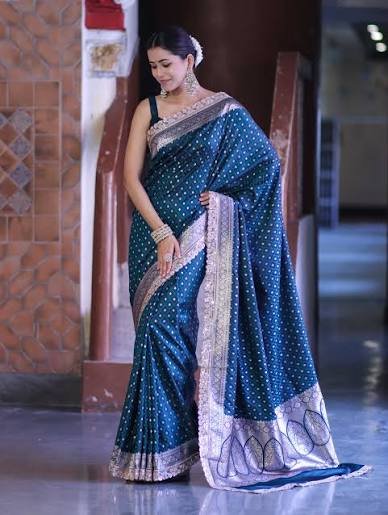
- Sarees and Statement Blouses: Modern wider-width looms now produce gorgeous striped and solid Mashru sarees. Even more popular is pairing a vibrant striped Mashru blouse with a plain handloom cotton, linen, or tussar saree for an instant pop of color.
- Menswear & Fusion Jackets: Staying true to its historical roots, Mashru makes phenomenal Nehru jackets (bandis), festive kurtas, and tailored waistcoats. It gives men a rich, festive sheen without feeling stiff or overly formal.
- Indo-Western & Contemporary Separates: Because of its crisp drape, designers use Mashru for bomber jackets, cropped trousers, pleated midi skirts, and structured co-ord sets.
- Luxury Home Furnishings: Historically used for traditional Gujarati quilts (godadi) and ceremonial wall hangings (chaklas), Mashru is now widely used for accent cushion covers, table runners, and upholstery in heritage-inspired Indian homes.
Mashru vs Silk vs Cotton: Key Differences
Still wondering whether you should pick Mashru fabric, pure silk, or pure cotton for your next outfit? Here is a quick, side-by-side comparison to help you decide:
| Feature | Mashru Fabric | Pure Silk (e.g., Mulberry / Katan) | Pure Cotton (Handloom) |
| Composition | Dual-layer weave: Silk warp (outer face) + Cotton weft (inner backing) | 100% natural protein fiber (silk yarn in both warp and weft) | 100% natural cellulose fiber (cotton yarn in both warp and weft) |
| Texture & Feel | Smooth and slick on the outside; soft, matte, and breathable against the skin | Smooth, lustrous, and cool initially, but can trap body heat in humidity | Soft, crisp, airy, and highly sweat-absorbent across both sides |
| Visual Appearance | Deep, satin-like sheen with bold stripes, ikat waves, or vibrant solids | High natural luster, fluid shimmer, and rich dye depth | Matte, understated finish with visible woven grain |
| Drape & Weight | Medium-to-heavy; structured, crisp drape that holds shape well | Lightweight to medium; fluid, flowing, and body-skimming | Lightweight to medium; relaxed, crisp, or airy depending on count |
| Common Uses | Festive kurtas, lehengas, blouses, Nehru jackets, sarees, and cushion covers | Bridal sarees, formal Banarasi/Kanjeevaram weaves, luxury dupattas | Daily office wear, summer kurtas, mulmul sarees, casual shirts |
How to Identify and Care for Mashru Textiles
Because genuine handwoven Mashru fabric is labor-intensive and limited in supply, markets today are flooded with powerloom imitations made from polyester or viscose rayon. Here is how you can spot the real deal and keep it looking gorgeous for years.
4 Ways to Identify Authentic Mashru Fabric
- Check Both Sides: Flip the fabric over. Real Mashru has two distinctly different faces—a glossy, smooth silk front and a visibly matte, slightly textured cotton back. If both sides look equally shiny or plasticky, it is likely synthetic satin.
- Look for Handloom Imperfections: Authentic Patan or Kutchi Mashru is woven on pit looms. Look closely along the stripes or ikat edges—you will notice tiny, organic variations in thread tension or subtle color feathering rather than machine-printed perfection.
- Check the Width: Traditional handloom Mashru yardage is often woven in narrower widths (around 23 to 36 inches, though some modern looms weave 44 inches) compared to standard 44-to-58-inch synthetic powerloom fabrics.
- Ask About the Fiber Content: Reliable craft brands and handloom stores will explicitly state “Silk Warp, Cotton Weft” or “Pure Silk & Cotton Mashru.” If a seller calls it “Art Silk Mashru” or “Modal Mashru,” know that it is a modern semi-synthetic adaptation rather than heritage Mashru.
Simple Care Tips for Your Mashru Garments
Even though Mashru is sturdier than pure silk thanks to its cotton base, its silk surface still deserves gentle care:
- First Wash – Dry Clean Only: Always dry clean new or heavily tailored Mashru garments for the first few wears to lock in the vibrant dyes and preserve the beaten satin sheen.
- Gentle Hand Wash (For Plain Yardage): If washing unembellished Mashru at home, use cold water and a mild, pH-neutral liquid detergent. Never soak it for long periods, and avoid harsh scrubbing or wringing.
- Dry in the Shade: Direct Indian sunlight can fade natural and acid silk dyes and dull the fabric’s gloss. Always line-dry your Mashru garments inside out in a shaded, airy spot.
- Iron on the Reverse Side: Always iron Mashru on the cotton backing using a medium heat setting, or place a thin cotton pressing cloth over the silk face to avoid scorch marks or flattening the weave.
- Breathable Storage: Store Mashru outfits wrapped in a pure muslin or cotton bag—never in plastic covers—so the natural silk and cotton fibers can breathe.
Frequently Asked Questions (FAQs)
1. Is Mashru fabric pure silk or cotton?
Traditional Mashru fabric is a combination of both. It is woven using 100% silk threads on the outer surface (warp) and 100% cotton threads on the inner surface (weft). However, modern commercial versions may substitute silk with rayon or modal, so always check the product composition before buying.
2. Is Mashru fabric good for Indian summers?
Yes, Mashru fabric is much more comfortable in warm weather than pure silk. Because the inner side touching your body is soft, breathable cotton, it absorbs sweat and prevents stickiness. While a sheer mulmul cotton is cooler for peak afternoon heat, Mashru is ideal for summer weddings, festive dinners, and air-conditioned events.
3. Why is Mashru fabric more expensive than regular cotton?
Handwoven Mashru requires pure mulberry silk for the warp, painstaking manual preparation (tano warping and flour-paste sizing), and slow weaving on traditional pit looms in clusters like Patan and Kutch. Because only a small number of master artisans practice this intricate craft today, genuine handloom Mashru is priced higher than standard cotton or powerloom blends.
4. What is the difference between Mashru and Himroo fabric?
Both Mashru and Himroo are historical Indian silk-and-cotton weaves developed to offer the luxury of silk with the comfort of cotton. However, Mashru originated primarily in Gujarat and uses a warp-faced satin weave known for glossy stripes, solids, and ikat patterns. Himroo, native to Aurangabad in Maharashtra, uses a discontinuous weft brocade technique to weave intricate floral, geometric, and Ajanta-inspired motifs over a cotton or wool base.
5. Can Mashru fabric be embroidered or block-printed?
Absolutely! In Kutch, Rabari and Ahir artisans have decorated Mashru skirts and blouses with mirror work (abhla) and colorful embroidery for generations. Plain solid-colored Mashru is also widely used as a base for traditional Ajrakh block printing and Bandhani tie-dye in Gujarat.
Final Thoughts
Whether you are building a conscious handloom wardrobe or simply looking for a festive outfit that lets you dance through a wedding without overheating, Mashru fabric is a true gem of Indian textile heritage. By choosing authentic silk-and-cotton Mashru crafted by Indian weavers, you aren’t just wearing a stunning piece of clothing—you are keeping centuries of Gujarati craftsmanship alive.
Have you ever worn a Mashru kurta, saree, or blouse? Let us know your favorite way to style this heritage weave in the comments below!
See Also
- How Is Mashru Silk Made? The History and Craft Behind India’s Heritage Fabric
- Mashru Silk Saree: The Silk and Cotton Weave Explained
- Earth, Water, and Indigo: The Magic of Traditional Ajrakh Block Printing
- The Queen of Silks: Behind the Magic of Pure Kanjivaram Silk Sarees
- Kota Doria vs Chanderi: Which Fabric Is Better for Summer?
- Maheshwari vs Chanderi Saree: 7 Key Differences in Fabric, Texture and Style